


Crypto Weekly, May 4–11: Bitcoin Held $80K, But The Real Action Moved Into Alts



In Brief
This was one of those weeks where Bitcoin technically did the important thing, but did not really own the whole story. BTC opened the week under pressure after geopolitical headlines dragged it back toward the $79,000 area, with ETH, SOL and DOGE also selling off as traders de-risked around renewed U.S.–Iran uncertainty.

This was one of those weeks where Bitcoin technically did the important thing, but did not really own the whole story. BTC opened the week under pressure after geopolitical headlines dragged it back toward the $79,000 area, with ETH, SOL and DOGE also selling off as traders de-risked around renewed U.S.–Iran uncertainty. Then the bid came back quickly. By May 5–6, Bitcoin was back above $81,000 and even pushed through the $82,000 zone, helped by ETF demand, a weaker dollar, short-covering and a broader risk-on rebound.
By May 11, though, the market had cooled into something more cautious. Bitcoin was hovering around $80,949, with an intraday range between roughly $80,397 and $82,394, while ETH sat near $2,330 and SOL near $95. That is not bearish in itself. In fact, the simple fact that BTC kept defending the $80K area after such a volatile macro week is constructive. But it also tells us the market is not in blind rally mode. Every push above $82K met selling, and traders were clearly asking whether the ETF bid was strong enough to absorb geopolitical risk, profit-taking and weaker exchange activity.
The strongest support under Bitcoin was still the ETF machine. Early in the week, U.S. spot Bitcoin ETFs reportedly pulled in serious capital, including roughly $539.6 million on May 4, $478.8 million on May 5 and $26.2 million on May 6, with BlackRock’s IBIT again doing most of the heavy lifting. That helped explain why BTC could bounce so quickly after the May 4 selloff. The problem is that ETF flows were not one-way by the end of the week. Farside data showed U.S. spot Bitcoin ETFs recording a $145.7 million net outflow on May 8, with Fidelity’s FBTC seeing a $97.6 million outflow. So the message from institutions was not “we are leaving.” It was more like: we are still here, but we are not chasing every candle.

Source: REUTERS/Joy
That fits the wider mood. Strategy, still the loudest corporate Bitcoin treasury name in the room, reported a much wider first-quarter loss this week as earlier BTC weakness hit the value of its holdings. Reuters reported that Strategy held 818,334 BTC as of May 3, while posting a $12.54 billion net loss for the quarter. The interesting part is not just the loss. It is that the company remains a proxy for how institutional Bitcoin exposure cuts both ways. When BTC rallies, Strategy looks like leveraged conviction. When BTC chops or slides, it becomes a reminder that “corporate adoption” does not remove volatility; it just moves that volatility onto balance sheets.

The main narrative catalyst was regulation, specifically the Clarity Act. Reuters reported that the U.S. Senate Banking Committee is set to consider the bill on May 14, with the legislation aimed at clarifying which regulators oversee different kinds of crypto assets and when tokens should be treated as securities, commodities or something else. That mattered for the market because crypto has spent years trading around regulatory fog. A credible path toward market-structure rules gives traders a reason to reprice not just Bitcoin, but exchanges, stablecoin businesses, tokenization plays and some large-cap altcoins.
Source: TradingView
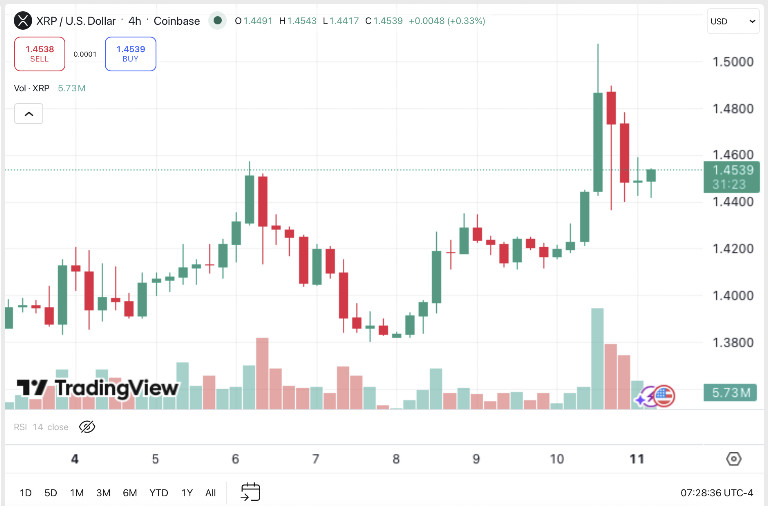
That is partly why XRP and Solana had a livelier finish than Bitcoin. Barron’s noted on May 11 that Bitcoin was stalling around the $80,700 area while XRP and SOL were rising, with altcoin strength tied to optimism around coming crypto legislation. XRP also broke above the long-watched $1.45 resistance area on heavy volume, outperforming both BTC and ETH in that session. This is the part of the week that matters for crypto-native readers: the market was not only buying “digital gold.” It was starting to price the idea that regulatory clarity could matter more for networks, tokens and trading venues that have lived under heavier legal ambiguity.
Source: TradingView
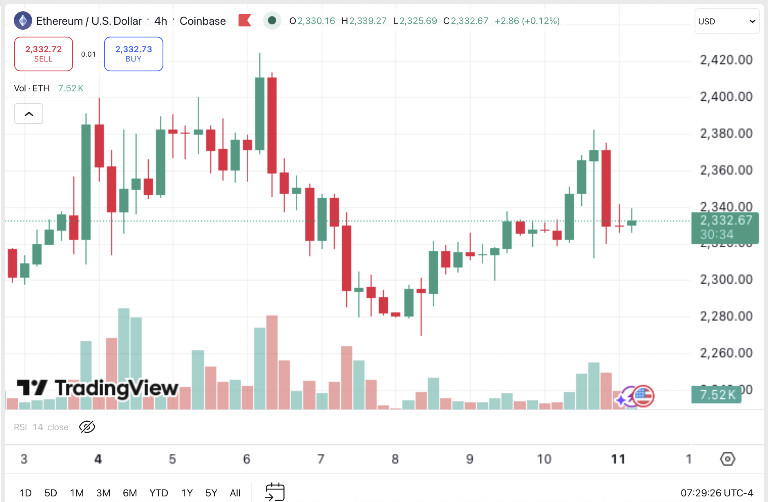
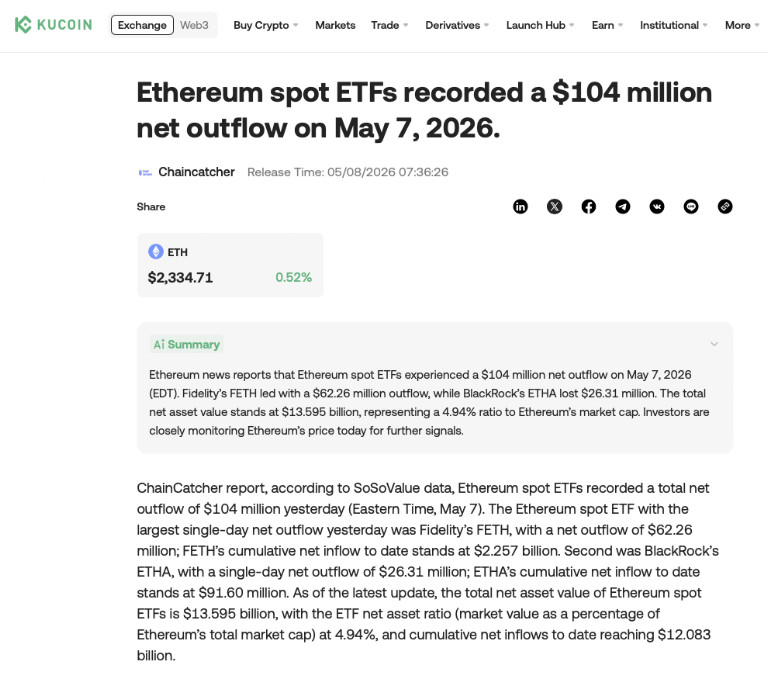
Ethereum, meanwhile, was fine but not exactly inspiring. ETH traded around the low-$2,300s late in the week, and its ETF picture was mixed. Reports showed Ethereum spot ETFs seeing a $104 million net outflow on May 7, led by outflows from Fidelity’s FETH and BlackRock’s ETHA, though other data later pointed to modest ETH ETF inflows by May 8.
Source: KuCoin
That explains ETH’s slightly dull feel. It was not collapsing, but it was not leading either. For now, ETH still looks like the asset everyone respects structurally, but fewer traders are treating as the cleanest short-term expression of the current narrative.
Source:TradingView
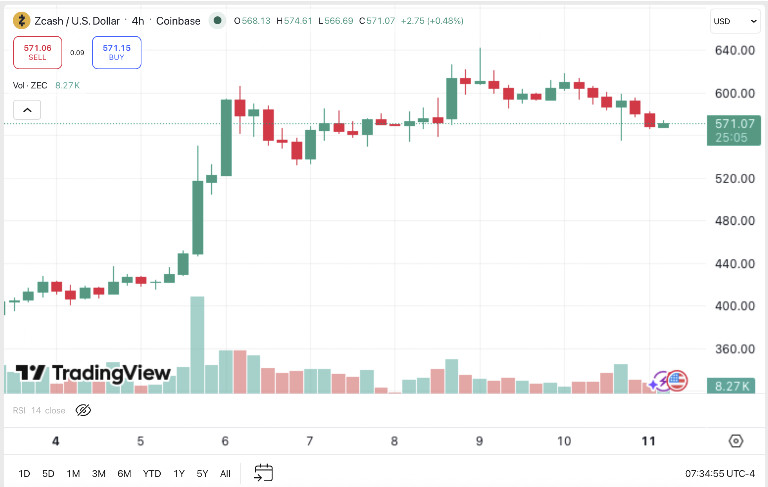
The more interesting altcoin action came from two very different corners: privacy coins and revenue-generating DeFi. Zcash had a monster move, with CryptoSlate reporting that ZEC jumped roughly 40% in a single session on May 7, briefly topping $600 and extending a month of sharp outperformance.
Source: TradingView
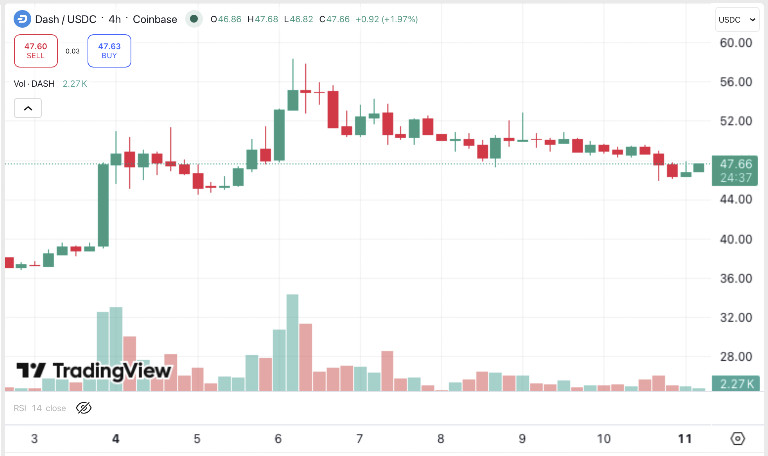
Dash also joined the move, with reports putting it up around 25% to 40% over the week as traders rotated into privacy names. This is not just random nostalgia for old coins. The pitch has shifted. Traders are now connecting privacy assets to surveillance risk, AI-driven data collection, zero-knowledge tech and even quantum-resistance narratives. Some of that is probably overheated, but the rotation itself was real.
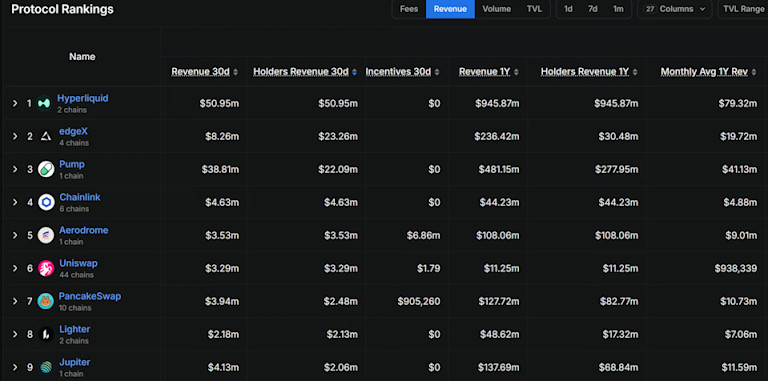
DeFi also had a more grown-up story this week. Hyperliquid, Pump.fun and EdgeX reportedly returned a combined $96.3 million to token holders over the previous 30 days. The significance is not merely the number. It is what the number says about the current market taste. After years of emissions, points, vague “ecosystem growth” and TVL theatre, traders are again paying attention to protocols that generate fees and recycle value back to holders. Hyperliquid in particular remains important here because it makes the perp-DEX thesis feel less theoretical and more like an actual operating business.
So the week’s takeaway is fairly clean: Bitcoin defended $80K, ETF demand kept the structure intact, and regulation gave the whole market something to front-run. But the livelier story was away from BTC. XRP and SOL caught a regulatory-clarity bid, privacy coins suddenly looked alive again, and DeFi revenue became fashionable in a way that feels more durable than another points campaign. Macro still matters, especially around Iran headlines, the dollar and risk appetite. But this week, crypto at least had its own internal reasons to move — and that is usually a healthier market than one waiting for the next Fed sentence to decide everything.
Disclaimer
In line with the Trust Project guidelines, please note that the information provided on this page is not intended to be and should not be interpreted as legal, tax, investment, financial, or any other form of advice. It is important to only invest what you can afford to lose and to seek independent financial advice if you have any doubts. For further information, we suggest referring to the terms and conditions as well as the help and support pages provided by the issuer or advertiser. MetaversePost is committed to accurate, unbiased reporting, but market conditions are subject to change without notice.
About The Author
Alisa, a dedicated journalist at the MPost, specializes in crypto, AI, investments, and the expansive realm of Web3. With a keen eye for emerging trends and technologies, she delivers comprehensive coverage to inform and engage readers in the ever-evolving landscape of digital finance.
More articles
Alisa, a dedicated journalist at the MPost, specializes in crypto, AI, investments, and the expansive realm of Web3. With a keen eye for emerging trends and technologies, she delivers comprehensive coverage to inform and engage readers in the ever-evolving landscape of digital finance.