AI Meets DeFi: Why Crypto Is Becoming The Execution Layer For Intelligent Agents



In Brief
The convergence of artificial intelligence and decentralized finance is no longer theoretical, as it is actively unfolding in today’s markets.
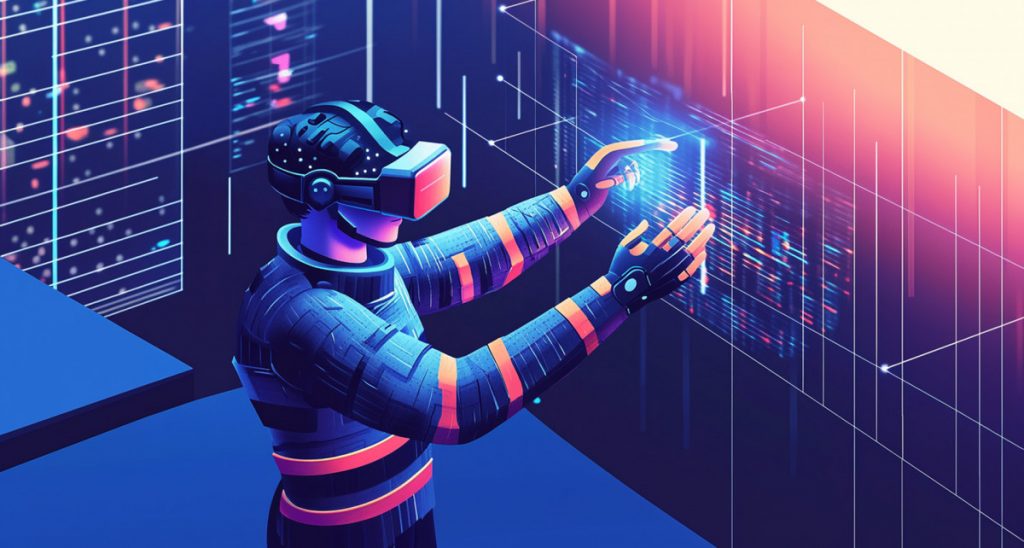
The convergence of artificial intelligence and decentralized finance is no longer theoretical, as it is actively unfolding in today’s markets. Binance Research’s latest Weekly Market Commentary highlights a structural shift in which AI is evolving from a tool for generating insights into a system capable of autonomous execution, while crypto is emerging as a natural environment for that transition.
Trillions Flowing Into AI
The scale of capital entering artificial intelligence provides the foundation for this transformation. According to Gartner, global AI spending is projected to grow from $1.76 trillion in 2025 to $2.52 trillion in 2026, and it is expected to reach $3.34 trillion by 2027. A significant portion of this investment is being directed toward infrastructure, including compute resources, data centers, and deployment layers, which collectively enable AI systems to operate at scale in real-world environments.
This rapid expansion is not only about improving model capabilities, but also about building the systems that allow AI to interact with dynamic and transactional ecosystems. These environments increasingly require the ability to process information, make decisions, and execute actions in real time.
Why Crypto Is a Natural Fit for AI Execution
While artificial intelligence has applications across many industries, finance, and particularly crypto, is emerging as one of the earliest and most practical monetization layers. The nature of financial markets makes them especially compatible with AI-driven systems.
Crypto markets operate continuously and require constant monitoring, which aligns well with the always-on capabilities of AI. In addition, blockchain data is transparent and structured in a way that is highly accessible for machine analysis. Smart contracts provide programmable financial infrastructure that allows AI systems not only to generate insights but also to execute transactions directly. These characteristics significantly reduce the gap between identifying an opportunity and acting on it.

As a result, crypto enables a more seamless integration between intelligence and execution than traditional financial systems, where multiple intermediaries often slow down the process.
From Co-Pilots to Autonomous Agents
A major shift is also taking place at the product level, where AI is moving beyond its role as a passive assistant and becoming an autonomous agent capable of initiating actions. This evolution is already visible in real-world usage patterns.
For example, data from Binance AI Pro shows that 45.7 percent of conversations in a single day were system-triggered, meaning they were initiated without direct user input. This indicates that AI systems are increasingly operating proactively by monitoring conditions and responding independently rather than waiting for instructions.
This transition is being supported by the development of identity systems that allow agents to act securely on behalf of users, payment infrastructure that enables seamless value transfer, and execution frameworks that connect AI systems directly to financial protocols. Together, these components are enabling AI to move from observation to action.
The Rise of Agentic Finance
The convergence of artificial intelligence and decentralized finance is giving rise to what can be described as agentic finance. In this emerging model, autonomous AI agents participate directly in financial markets, continuously optimizing strategies and executing transactions.
AI agents can manage portfolios by dynamically adjusting allocations based on changing market conditions. They can also optimize yield strategies and implement risk management processes in real time. This creates a more adaptive and responsive financial system that operates with minimal human intervention.
Crypto’s composability and open architecture make it an ideal environment for developing and testing these systems, as protocols can be combined and interacted with programmatically.
Looking Ahead
The intersection of AI and DeFi is still in its early stages, but its trajectory is becoming increasingly clear. Continued investment in AI infrastructure and ongoing advancements in crypto’s execution capabilities are driving the two fields closer together.
Artificial intelligence provides the analytical and decision-making capabilities, while crypto provides the infrastructure for execution. Together, they are forming a new technological stack that enables machines not only to understand markets but also to actively participate in them.
This convergence has the potential to redefine how financial systems operate, as autonomous agents become more deeply integrated into the fabric of global markets.
Disclaimer
In line with the Trust Project guidelines, please note that the information provided on this page is not intended to be and should not be interpreted as legal, tax, investment, financial, or any other form of advice. It is important to only invest what you can afford to lose and to seek independent financial advice if you have any doubts. For further information, we suggest referring to the terms and conditions as well as the help and support pages provided by the issuer or advertiser. MetaversePost is committed to accurate, unbiased reporting, but market conditions are subject to change without notice.
About The Author
Alisa, a dedicated journalist at the MPost, specializes in crypto, AI, investments, and the expansive realm of Web3. With a keen eye for emerging trends and technologies, she delivers comprehensive coverage to inform and engage readers in the ever-evolving landscape of digital finance.
More articles
Alisa, a dedicated journalist at the MPost, specializes in crypto, AI, investments, and the expansive realm of Web3. With a keen eye for emerging trends and technologies, she delivers comprehensive coverage to inform and engage readers in the ever-evolving landscape of digital finance.