Vitalik Buterin Declares Pseudonymity ‘Dead’ In 2026, Urging Shift Beyond Encrypted Messaging To Full Anonymity



In Brief
Vitalik Buterin welcomes Signal’s phone-free registration but warns AI inference has made pseudonymity obsolete, calling for message-by-message unlinkability.
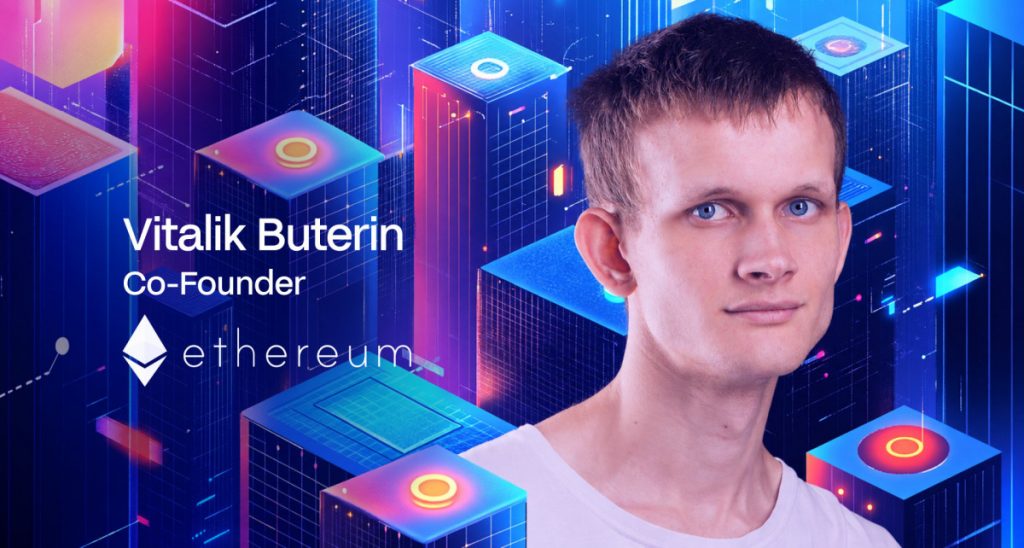
Ethereum co-founder Vitalik Buterin has publicly welcomed Signal’s initiative to allow user registration without a phone number, characterizing the development as a step toward reducing dependence on what he termed a “highly oligopolistic system of chokepoints.”
In a detailed post on social media platform X, he outlined multiple practical advantages of decoupling the encrypted messaging platform from traditional telephone infrastructure, including a significant reduction in identity theft risks stemming from SIM-swapping attacks and a decreased ability for governments to compel platforms to restrict access based on users’ nationalities.
The commentary comes after Signal confirmed it is exploring alternative signup pathways. Source code references indicate that the upcoming feature, internally labeled “Signal Login,” will remain optional and will require a one-time payment rather than a recurring subscription, with the fee designed to deter spam and abuse while helping fund the non-profit organization’s operations.
Although Vitalik Buterin acknowledged that eliminating the phone number requirement represents a marked improvement over the status quo, he cautioned that the advancement does not, in itself, resolve the deeper privacy vulnerabilities inherent in modern digital communication.
The Limits of Pseudonymity in an Age of AI Inference
Ethereum co-founder argued that pseudonymity—the practice of maintaining persistent accounts disconnected from real-world identities—has become a “dead concept” in 2026, as users continuously leak identifying metadata through message timing, contact graphs, communication frequency, and behavioural patterns that sophisticated artificial intelligence systems can correlate and piece together.

To illustrate the hierarchy of privacy protections, he presented a taxonomy ranging from complete exposure to ideal unlinkability, noting that while Signal’s end-to-end encryption already ensures confidentiality by shielding message contents from third parties, genuine anonymity demands “message-by-message unlinkability,” wherein no observer can determine sender-receiver pairs or even identify individual participants.
He identified mixnet-based architectures and newer protocols such as Session and SimpleX Chat as projects actively pursuing this standard. However, he highlighted spam and denial-of-service protection as the critical remaining barrier, drawing a parallel to the widespread blocking of Tor exit nodes by services attempting to mitigate abuse. He pointed to emerging cryptographic approaches for establishing non-spammer credentials without sacrificing unlinkability.
Vitalik Buterin concluded by urging the privacy community to treat phone-number-free registration as an important milestone rather than a final destination, while continuing to advance data leakage minimization. He also noted reports that Signal’s planned payment mechanism currently lacks a cryptocurrency option, which could otherwise offer users an additional layer of financial privacy.
Disclaimer
In line with the Trust Project guidelines, please note that the information provided on this page is not intended to be and should not be interpreted as legal, tax, investment, financial, or any other form of advice. It is important to only invest what you can afford to lose and to seek independent financial advice if you have any doubts. For further information, we suggest referring to the terms and conditions as well as the help and support pages provided by the issuer or advertiser. MetaversePost is committed to accurate, unbiased reporting, but market conditions are subject to change without notice.
About The Author
Alisa, a dedicated journalist at the MPost, specializes in crypto, AI, investments, and the expansive realm of Web3. With a keen eye for emerging trends and technologies, she delivers comprehensive coverage to inform and engage readers in the ever-evolving landscape of digital finance.
More articles
Alisa, a dedicated journalist at the MPost, specializes in crypto, AI, investments, and the expansive realm of Web3. With a keen eye for emerging trends and technologies, she delivers comprehensive coverage to inform and engage readers in the ever-evolving landscape of digital finance.