Top 10 Companies Bringing Stablecoins and Crypto to Visa and Mastercard




The launch expands MoneyGram’s stablecoin strategy beyond remittances and connects digital-dollar balances with everyday card payments. The company has worked with the Stellar Development Foundation since 2021 on cash-to-USDC and USDC-to-cash services.

Nium
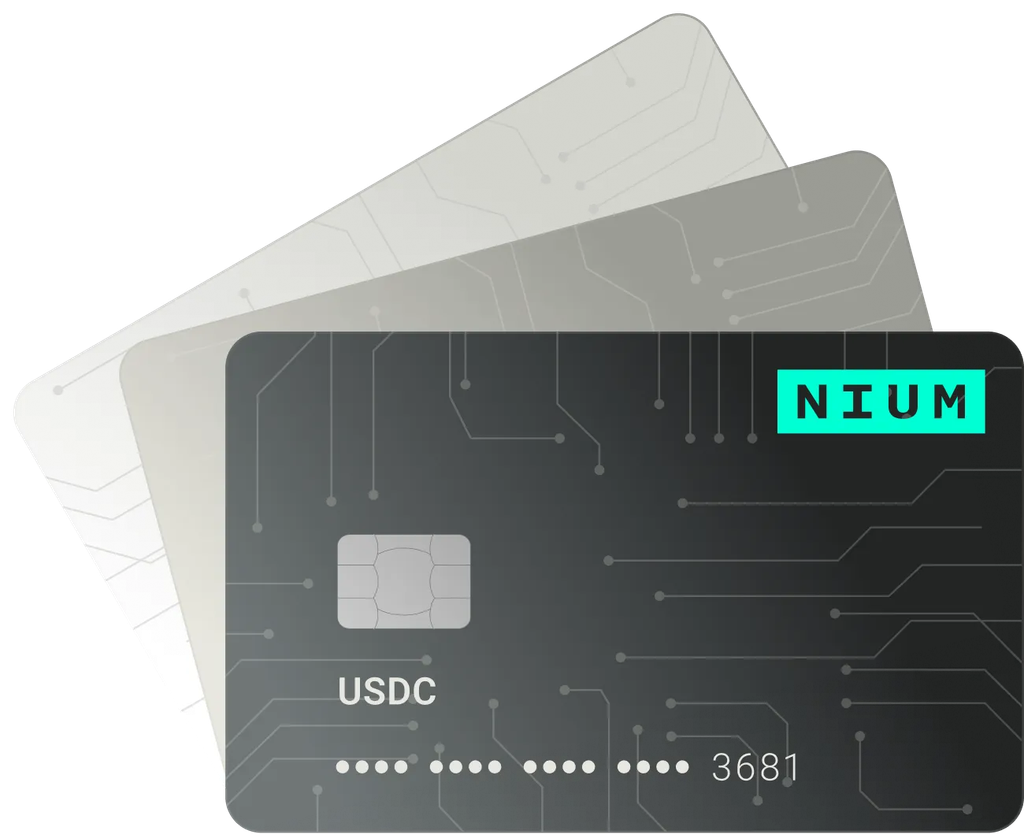
Nium provides infrastructure for businesses that want to issue stablecoin-funded cards. Its 2026 platform supports both Visa and Mastercard through a single API, allowing companies to build their own card programs without developing the entire issuing infrastructure.
Nium says merchants receive fiat while stablecoin conversion and settlement occur behind the scenes. Its infrastructure is designed for fintechs, exchanges, marketplaces and businesses.
Rain
Rain specializes in stablecoin-powered payment infrastructure and enables partners to launch card programs. In March 2026, Rain announced an expansion of its Visa membership into Asia-Pacific, increasing its capacity to support consumer and corporate card programs in the region.
Rain is also the card infrastructure provider behind MoneyGram’s new USDC-backed Visa product in Colombia.


Wirex
Wirex provides crypto and stablecoin cards for everyday spending. Its current offering supports spending, withdrawals and rewards, while the company maintains principal memberships with both Visa and Mastercard.
Wirex also offers co-branded card infrastructure, allowing businesses to issue branded Visa cards backed by stablecoin functionality while Wirex handles infrastructure and payment rails.

KAST
KAST provides stablecoin-focused payment cards designed to allow users to spend on-chain balances at Visa-accepting merchants. Its current card product supports virtual cards and global spending, with stablecoins deposited through supported networks and converted into dollars for card use.
KAST describes its service as a bridge between on-chain money and conventional payments, with availability varying by jurisdiction.

Gnosis Pay
Gnosis Pay takes a different approach by connecting self-custodied crypto wallets directly to Visa payments. Users can spend eligible digital assets without first transferring their funds into a conventional custodial card balance.
Gnosis says its card connects on-chain assets to Visa while users retain control of their funds until payment processing. In June 2026, Gnosis confirmed that its card was generated through the Gnosis application following KYC verification.

RedotPay
RedotPay provides stablecoin-based virtual and physical cards. Its platform supports assets including USDC, USDT, BTC, ETH, SOL and other cryptocurrencies, converting supported digital assets into local currency when payments are made.
The company says its cards can be used online, in stores and at ATMs where major card networks are accepted, with services available in more than 100 countries.

Bitget
Bitget has expanded crypto-card services into Asia-Pacific. In April 2026, Bitget announced a Visa-powered Bitget Card developed with DCS, initially offering virtual cards to selected APAC users.
The card converts crypto into fiat for everyday spending and is designed to remove the need for users to manually sell assets before making purchases. Bitget Wallet also offers a card that can be used at Visa and Mastercard merchants and supports assets including USDC and USDT.

Crypto.com
Crypto.com offers prepaid cards connected to its digital-asset ecosystem. The company describes its Crypto.com Visa Card as a prepaid product that users top up before spending.
The platform also offers virtual cards and, in the United States, a separate Visa Signature credit-card product for eligible customers. Product availability, card type and benefits vary by jurisdiction.

Coinbase
Coinbase offers crypto-linked card products in selected markets. Its Coinbase Card allows eligible users to spend crypto, including USDC, wherever Visa debit cards are accepted.
Coinbase also launched the Coinbase One Card in the United States, a separate credit-card product that offers Bitcoin rewards. The debit and credit products should therefore not be treated as identical offerings.

Final Thoughts
The stablecoin-card market is developing quickly as companies connect blockchain balances with established Visa and Mastercard payment networks. Visa reported that stablecoin-linked cards already processed billions of dollars in 2025, while its program count was expected to roughly double during 2026.
The market includes several different models. MoneyGram combines its established money-transfer network with USDC and Visa; Nium, Rain and Reap provide infrastructure for businesses; Wirex, KAST, RedotPay, Bitget, Crypto.com and Coinbase offer consumer or business-facing products; while Gnosis Pay emphasizes self-custody.
Mastercard is also expanding its stablecoin infrastructure. In June 2026, the company announced plans to support regulated stablecoins, including USDC, for on-chain card settlement alongside traditional settlement methods.
One important point is that a stablecoin card does not necessarily mean the merchant receives cryptocurrency. In many implementations, the user’s stablecoin is converted to fiat during authorization or settlement, allowing the merchant to receive payment through conventional card infrastructure. Nium explicitly describes this model for its Visa and Mastercard programs.
As stablecoin adoption expands, these cards could become an increasingly important bridge between digital-dollar wallets and everyday commerce. Availability, supported assets, fees, custody arrangements and regulatory permissions remain highly dependent on the country and card program.
Disclaimer
In line with the Trust Project guidelines, please note that the information provided on this page is not intended to be and should not be interpreted as legal, tax, investment, financial, or any other form of advice. It is important to only invest what you can afford to lose and to seek independent financial advice if you have any doubts. For further information, we suggest referring to the terms and conditions as well as the help and support pages provided by the issuer or advertiser. MetaversePost is committed to accurate, unbiased reporting, but market conditions are subject to change without notice.
About The Author
Anastasiia O. is an editor at MPost, where she focuses on reshaping content across a wide spectrum of topics. With an eye for detail and a genuine interest in storytelling, she helps ensure that the content is both accurate and engaging. Her experience spans multiple areas, providing her with the knowledge to offer insightful contributions to various topics highlighted on the platform.
More articles
Anastasiia O. is an editor at MPost, where she focuses on reshaping content across a wide spectrum of topics. With an eye for detail and a genuine interest in storytelling, she helps ensure that the content is both accurate and engaging. Her experience spans multiple areas, providing her with the knowledge to offer insightful contributions to various topics highlighted on the platform.