Top 10 AI Companies Building Financial Digital Twins



Digital twins have existed for a long time and are linked to manufacturing facilities, aircraft engines, and smart cities. A virtual model is built by engineers to simulate a physical system to predict failure and optimise the system’s performance without changing the physical system.
This idea is now also wending its way through finance.
Financial digital twins can simulate a company, a portfolio, a supply chain, or an entire financial system in real time thanks to the use of AI, real-time market data, predictive analytics, and simulation models. Apart from reporting, organizations can now test investment strategies and model liquidity shocks, anticipate cash flows, and evaluate risks before taking big investment decisions.
While it’s at its nascent stage, the number of companies working on AI solutions continues to rise, and its impact on the way banks, insurers, asset managers, and corporations handle money will be enormous.
Here are 10 of those companies that are making that change in 2026.

DataRobot
DataRobot has emerged as one of the most popular enterprise AI platforms, offering predictive modelling capabilities for financial institutions without the need for data scientist teams.
Banks and investment companies leverage their AI to generate virtual models of customers, customer habits, and operations. They can be used to model changes in interest rates, changes in customer spending, etc., and organizations can test various financial scenarios and see which one makes the most sense for them.
It’s also been a successful fit for highly regulated sectors where being able to explain the AI’s decision-making is crucial.

C3 AI
C3 AI has been working on enterprise AI solutions for large companies, such as financial institutions, for years.
Its platform enables businesses to create digital twins of their operations and integrate operational data with financial data, creating simulations that can be used for budgeting, forecasting, fraud detection, and enterprise risk management.
Organizations don’t have to rely on disparate spreadsheets to track a constantly changing financial model that matches the business model in the real world.
C3 AI is expanding its financial services offerings as enterprise AI adoption increases.

Palantir Technologies
Palantir has established itself as a company that can help companies interpret large volumes of complex data.
It has an Artificial Intelligence Platform (AIP) that helps financial institutions integrate structured and unstructured data into a single operational model. These digital representations can be used to model supply chain issues, political changes, market fluctuations, and liquidity issues before they become a reality in business.
Many large banks, governments, and investment companies are turning to Palantir to make better decisions in uncertain times.

SAS
Even before generative AI was ubiquitous, financial institutions were using SAS to model risk.
The company’s AI-enabled analytics platform is now used for digital twin applications in banking, insurance, and capital markets. Institutions can model their credit portfolios, evaluate their operational risks, predict customer behavior, and analyse regulatory scenarios by regularly updating financial models.
SAS’ decades of experience in advanced analytics continue to provide the enterprise finance sector with a strong footing.
Altair
While the company is perhaps most well-known for engineering simulation, it has steadily grown into the business modeling with artificial intelligence.
Its technology allows organisations to create digital twins that integrate operational, manufacturing and financial data to assist executives in making investment decisions, production cost decisions and in forecasting long-term financial results.
When companies are involved in complex international operations, integration of engineering and finance gives a much more comprehensive view of enterprise health.

SymphonyAI
SymphonyAI is not a general AI solution, it’s a solution for the music industry.
In finance, its uses include allowing banks and insurance companies to model customer interactions, operational efficiency, fraud risks, and compliance requirements with ever-evolving AI systems. Digital models of financial operations help businesses to pinpoint inefficiencies before they turn into costly issues.
The firm has spent a lot of money developing predictive analytics for enterprise decision makers.

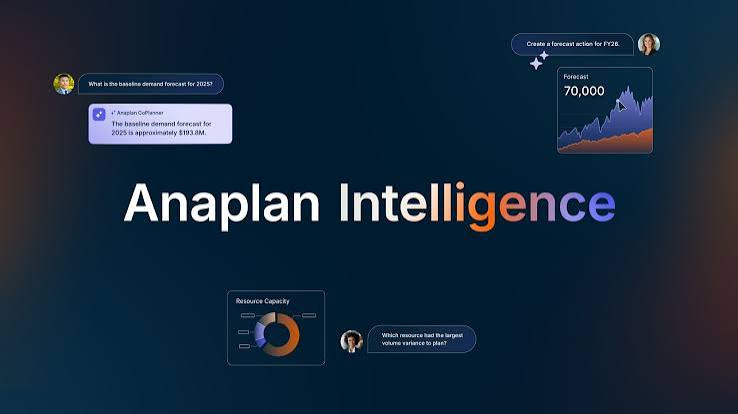
Anaplan
Historically, financial planning has been done using static forecasts. Anaplan is looking to change that.
It features a connected planning platform that allows finance teams to create dynamic business models that are continually updated as the business evolves. AI can boost the accuracy of these models, run a series of business scenarios, and assist executives in assessing how strategic decisions will affect the business and the financial forecast.
Anaplan does not generate quarterly “snapshots” of the model, but instead lets companies control dynamic financial models that change over time.
Workday
AI has been incorporated throughout the Workday finance platform.
Its AI features enable organizations to model their workforce planning, operating costs, revenue projections, and capital expenditure decisions. These constantly evolving models enable finance departments to predict changes, rather than just respond to them.
With the increasing ubiquity of AI in enterprise software, Workday is making financial planning a more and more predictive process.
Oracle
Oracle has emerged as one of the biggest providers of enterprise finance software with its AI capabilities.
Its cloud solutions integrate financial management, enterprise resource planning, and predictive analytics in single solutions that can support digital twin projects. AI-powered forecasts based on live business data can be used to model businesses’ cash flows, procurement, inventory, and operational expenses.
The company’s huge cloud infrastructure makes it especially appealing to large multinational firms that operate large financial operations.

Celonis
A financial digital twin is a concept that Celonis adopts from a process intelligence viewpoint.
Its AI technology captures the flow of money, information, and business processes within an organization and builds a digital model of the business to uncover pain points, inefficiencies, and overspending. Companies can then model the improvement to their processes before implementing it.
Rather than just accounting data, Celonis gives visibility into processes in the organization that directly impact financial performance.

Why Financial Digital Twins Matter
Forecasts have been a staple of financial leadership since the beginning of time. What is different now is that with the aid of AI, those forecasts can be continually updated.
Instead of having to wait for monthly reports, businesses can monitor financial models in real time and understand how customer actions, supply chain problems, market changes, regulatory changes, or operational metrics are impacting their bottom line.
As businesses work in an unstable economic climate, that’s a capability that is more and more useful. Deloitte reports that the rollout of AI-powered digital twins is beginning to grow into a valuable asset for enterprise planning, enabling decision-makers to test different strategies, bolster resilience and make quicker decisions with access to constantly changing data. Similarly, Gartner predicts that digital twins will become an integral part of the digital transformation of enterprise AI in various industries, including financial services.
These companies include DataRobot, C3 AI, Palantir, SAS, Altair, SymphonyAI, Anaplan, Workday, Oracle, and Celonis, which are taking different approaches to the problem. Some are interested in predictive analytics, some in enterprise planning or operational intelligence. Together, they are contributing to the creation of dynamic, data-driven financial systems for businesses.
Digital twins may be more than planning tools in the future, as AI keeps changing the corporate finance landscape. They may turn into a system that will direct the financial decision-making within entire organizations.
Disclaimer
In line with the Trust Project guidelines, please note that the information provided on this page is not intended to be and should not be interpreted as legal, tax, investment, financial, or any other form of advice. It is important to only invest what you can afford to lose and to seek independent financial advice if you have any doubts. For further information, we suggest referring to the terms and conditions as well as the help and support pages provided by the issuer or advertiser. MetaversePost is committed to accurate, unbiased reporting, but market conditions are subject to change without notice.
About The Author
Alisa, a dedicated journalist at the MPost, specializes in crypto, AI, investments, and the expansive realm of Web3. With a keen eye for emerging trends and technologies, she delivers comprehensive coverage to inform and engage readers in the ever-evolving landscape of digital finance.
More articles
Alisa, a dedicated journalist at the MPost, specializes in crypto, AI, investments, and the expansive realm of Web3. With a keen eye for emerging trends and technologies, she delivers comprehensive coverage to inform and engage readers in the ever-evolving landscape of digital finance.