


‘Proof Before Distribution’: CYCLE Founder Andre Dezigner On Why Trust Must Come Before Scale



In Brief
CYCLE founder Andre Dezigner explains why verifiable credibility must come before scale, and how proof-first go-to-market thinking helps Web3, AI and fintech companies earn trust.
In findings published on September 22, 2026, Gartner reported that 57% of surveyed U.S. consumers said AI-generated content had made them less trusting of brand messaging overall. The insight arrives at a moment when the broader marketing industry is confronting what analysts have begun calling a structural credibility problem: content production scaled without credibility scaling alongside it, and audiences are penalizing brands that got that order of operations wrong. For companies operating in complex or regulated markets, where a buyer, investor or partner conducts serious due diligence before any engagement, that erosion carries particular weight.
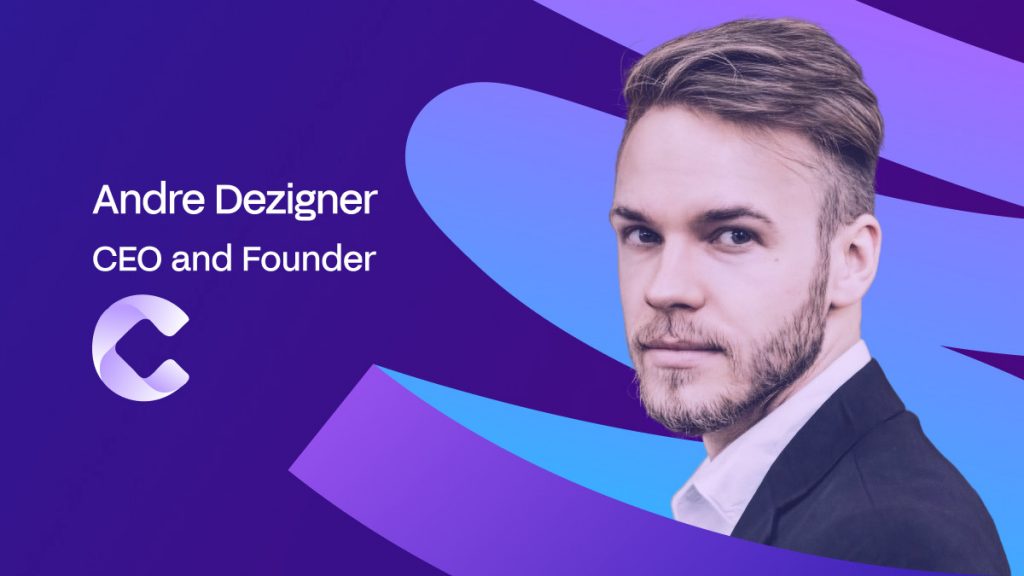
Andre Dezigner is the founder and CEO of CYCLE, a go-to-market operator working with founder-led teams in Web3, AI, fintech and deep-tech infrastructure. He has built the company around one principle: that verifiable credibility must precede scale instead of following it. That implies taking responsibility for connecting a company’s positioning, proof layer, distribution and execution into one coordinated system rather than a set of disconnected vendor activities.
We spoke with Andre to explore this model, understand what the rise of synthetic content means for companies that need to build lasting trust, and find out what founders should do in the months before a major launch.
CYCLE calls itself a GTM operator. What changes for a founder when the work is organised that way?
For me, “operator” means taking responsibility for GTM decisions as well as execution. We work alongside the founder to decide which audience matters first, what that audience needs to understand, what evidence supports the story, and what action we want people to take.

CYCLE turns those decisions into positioning, founder-led content, proof assets, launch plans and coordinated distribution.
A company can have capable PR, content and community specialists and still leave the founder responsible for every connection between them. We take ownership of that operating layer: priorities, briefs, quality, timing and learning from the market.
Marketing services are part of what we deliver. “GTM operator” describes how we decide what should be delivered, in what order, and why.
Founder-led GTM is not primarily about making the founder more visible. It is about turning the founder’s knowledge into something the business can use: clearer positioning, better product explanations, stronger sales materials and more useful answers to customer questions. The founder should not have to explain the company from scratch in every conversation. Founder-led should not mean founder-dependent.
Across Web3, AI and fintech, what is the core trust problem these industries share? Why are conventional marketing approaches failing to solve it?
The common problem is that an outsider cannot easily judge the substance behind the promise.
An AI company might claim that its product transforms a workflow. A fintech company asks people to trust it with important financial activity. A Web3 project may combine a technical product, a token and a community. In each case, people need help understanding what truly works, what remains a plan and what they can verify.
Conventional marketing still has a role. It becomes ineffective when visibility is expected to resolve those questions by itself. A polished campaign can introduce a company, but the audience still needs a credible explanation, relevant evidence and clear answers.
The task is to make evaluating the company easier. More attention becomes useful when people have something substantial to evaluate.
You have a concept called “proof before distribution,” meaning trust before attention. Can you tell us more about what that means? What needs to be in place before a company scales attention?
It means being ready for the scrutiny that attention brings.
Imagine someone discovers a project through a respected creator. They visit the website, look up the founders, check the product and read what other people are saying. The credibility of that first recommendation now depends on what they find.
Proof can take different forms: a working demonstration, a specific customer example, clear documentation, a verifiable partnership or an honest account of what has been built so far. The right evidence depends on the promise being made.
An early-stage company can communicate early and learn in public. It should be clear about its stage and support the claims it makes. “Proof before distribution” is about matching the strength of the message to the strength of the evidence before increasing its reach.
Your portfolio includes an OKX regional PR campaign, the Web3 Epic Challenge partnership involving Bybit, and earlier-stage projects such as Solarious and Cyberbase. How did those engagements differ?
The starting point changes considerably.
An established exchange already has recognition, a product and a market history. The work can be more focused: reaching a particular region, explaining a development or building relevance with a specific audience. Our OKX case, for example, involved crypto-media coverage and expert commentary in business media for the CIS market.
With an earlier-stage project, more of the explanation may need to be developed. Solarious required work around its Proof-of-Energy positioning and how to communicate that concept to partners, media and the community.
Cyberbase presented another kind of task: traffic, social growth and community around a Telegram mini-app.
Bybit’s involvement in our portfolio was through the Web3 Epic Challenge partnership. Those are different engagements, so I would avoid applying one formula simply because all the projects operate in Web3.
The Web3 Epic Challenge with Bybit generated 280,000 participants and 25 million impressions. Behind those numbers, what was the work that made that possible?
The foundation was a shared campaign that gave several projects a reason to participate together.
Web3 Epic Challenge combined a Zealy quest format, headline partners, more than ten participating projects in each campaign and a prize pool. The initiative included campaigns with The Sandbox and Bybit as headline partners.
The work was in bringing those elements together: coordinating participation, shaping the activities, connecting partner communication and giving audiences a clear reason to explore the other projects involved. The partnership had to become something people could actually take part in.
The results were more than 320,000 participants and over 25 million impressions for the campaign. Those measure different things: impressions are repeated exposures, not unique people. I would also distinguish campaign participation from long-term product adoption, which needs its own measurement.
KOL marketing divides opinion in Web3. You have argued it is neither inherently good nor bad, but that most teams use it in the wrong sequence. What do you mean by that?
A creator can introduce a project to a relevant audience and help explain why it matters. The next part depends on the project itself.
If people arrive and cannot understand the product, verify the main claims or find a useful next step, much of that attention may be lost. Teams can then conclude that the creator was ineffective, even though the weakness was elsewhere.
The sequence should reflect what the project is ready to support. Clarify the audience and proposition, prepare the evidence and the experience people will encounter, then choose creators who can communicate it credibly.
There is also a useful role for creators earlier on, such as testing explanations or gathering feedback. That is a different assignment from a large promotional campaign and should be briefed and measured accordingly.
What does CYCLE offer companies that already have KOL, PR and community vendors?
We provide coordination and judgment across their work.
A PR specialist needs a strong, supportable story. A creator needs a clear brief and a relevant audience. A community team needs accurate information and a way to handle the questions that promotion generates. Decisions made in one area affect the others.
CYCLE’s role is to connect the objective, message, evidence, timing and responsibilities. That includes identifying gaps between suppliers, resolving conflicting messages and making sure feedback from the market reaches the people making decisions.
Existing specialists can remain in place. If a company already has strong internal leadership doing this effectively, it may only need a specific service from us. The broader operating role is valuable when coordination keeps falling back onto the founder.
You have described the goal of your work as making companies easier to understand, verify, trust and buy from. Which project in your portfolio best demonstrates that? Why?
Solarious is a useful example. The project brings together solar production, hardware verification and a Proof-of-Energy blockchain model. The challenge was to make that story understandable without blurring what had been built and what still needed to be demonstrated.
Our work connected positioning, founder narrative, proof mapping and media-ready materials. A partner, journalist or prospective participant needed to understand the same core model, while finding the evidence relevant to their own questions.
That is what I mean by making a company easier to evaluate: not simplifying away the complexity, but giving people a clear path through it.
The best time to bring us in is when a company has real substance, but its website, founder narrative, proof and channel activity still tell different stories. We start by identifying the gap and deciding what needs to change first.
How important is the founder’s own public presence in a go-to-market strategy? When does it matter most?
It matters most when understanding the founder’s judgment helps people understand the company.
That is often the case with an early-stage or technically complex product. The founder can explain why the problem matters, why the team chose a particular approach and which trade-offs it has made. Those explanations are difficult to replace with generic corporate content.
A useful public presence can be quite focused: a clear profile, thoughtful commentary, occasional demonstrations and direct answers to important questions. The format should suit the person and the audience.
As the company develops, customer evidence, product performance and the wider team should carry more of the explanation. The founder’s voice helps establish accountability, while the business gradually builds a broader foundation for trust.
Where does CYCLE go as AI and deep-tech companies face similar trust challenges?
I see a natural extension into companies whose products require explanation before a buyer can make a confident decision.
Our strongest case history is in Web3. That gives us experience with technical complexity, public skepticism, communities and the need to make ambitious claims understandable. Some of those challenges also appear in AI, fintech and deep tech.
The approach needs to respect the differences. An enterprise AI buyer may need a repeatable evaluation, a clear implementation story and answers about data handling. An infrastructure project may need technical documentation and evidence of adoption.
The direction I want for CYCLE is to get better at connecting those requirements to communication and execution. Expansion should follow relevant expertise and demonstrable work, with evidence built in each category.
AI is flooding the market with synthetic content and automated reach. What does that mean for how trust-sensitive companies need to build credibility?
It raises the importance of what sits behind the content.
When a company can produce polished articles, visuals and presentations quickly, presentation alone tells the audience less about its competence. People have more reason to look for the origin of a claim, the method behind a result and the people accountable for it.
For a company, that makes original evidence especially valuable: a real demonstration, a clearly explained test, a specific customer example or a thoughtful account of a difficult decision.
AI can help organise information, draft material and adapt it to different formats. The company still needs to own the accuracy of what it publishes. I would use the time saved to improve the underlying evidence and answer better questions.
A founder is six months from a major launch or fundraising round. What is the one piece of advice you would give them?
Start building the evidence you want to be able to show in six months.
Work backwards from the decision you want someone to make. A prospective customer, partner and investor will each need different things to become comfortable with that decision. Identify the most important uncertainties early enough to do something about them.
That might mean running a useful pilot, documenting customer feedback, improving a demonstration or making a technical explanation easier to follow. Some evidence takes time to create, and a communications team cannot produce it at the last minute.
A launch date gives you a deadline for telling the story. Use the months before it to make that story stronger through the work itself.
Disclaimer
In line with the Trust Project guidelines, please note that the information provided on this page is not intended to be and should not be interpreted as legal, tax, investment, financial, or any other form of advice. It is important to only invest what you can afford to lose and to seek independent financial advice if you have any doubts. For further information, we suggest referring to the terms and conditions as well as the help and support pages provided by the issuer or advertiser. MetaversePost is committed to accurate, unbiased reporting, but market conditions are subject to change without notice.
About The Author
Alisa, a dedicated journalist at the MPost, specializes in crypto, AI, investments, and the expansive realm of Web3. With a keen eye for emerging trends and technologies, she delivers comprehensive coverage to inform and engage readers in the ever-evolving landscape of digital finance.
More articles
Alisa, a dedicated journalist at the MPost, specializes in crypto, AI, investments, and the expansive realm of Web3. With a keen eye for emerging trends and technologies, she delivers comprehensive coverage to inform and engage readers in the ever-evolving landscape of digital finance.