‘If It Works In Japan, It Works Anywhere’: Rise Ooi Of Jurin AI On Why The World’s Hardest Market Is AI’s Most Important One



In Brief
Japan is AI’s ultimate test market. Jurin AI founder Rise Ooi explains why labor collapse, zero adoption friction, and extreme enterprise standards make Japan the world’s most important AI sandbox.

The global conversation about AI almost always frames the technology as a threat — a force that eliminates jobs, displaces workers, and concentrates wealth. Japan makes that entire debate look beside the point.
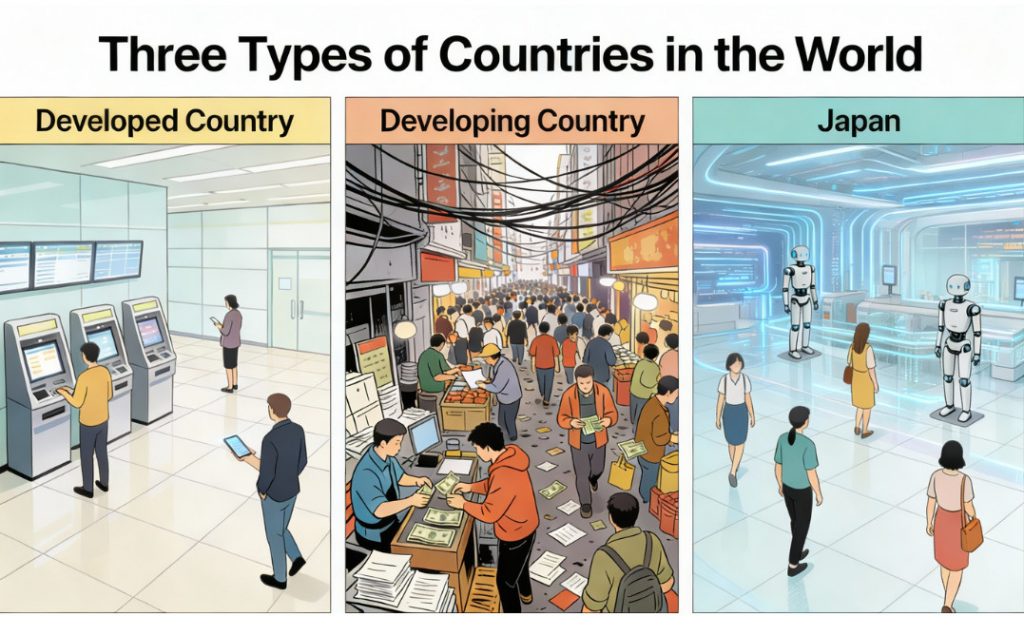
Japan’s population has declined for fourteen consecutive years. Its working-age population is projected to shrink by nearly 15 million over the next two decades. There are already 124 job openings for every 100 job seekers. In 2024 alone, bankruptcies attributed to labor shortages surged 32% — businesses that were profitable, that had customers, that simply ran out of people to operate. In Japan, AI isn’t arriving to take anyone’s job. It’s arriving because there is no one else.
This is the lens through which Rise Ooi, founder and CEO of Jurin AI, has built his company. Based in Tokyo, Jurin AI works with Japanese enterprises — including some of the country’s largest corporations — and has closed its first enterprise deals within months of founding.
In this interview, Rise explains why Japan is the ultimate stress test for AI products, what zero adoption friction actually looks like in practice, and why the demographic crisis spreading from South Korea to southern Europe means the rest of the world is simply on a slower version of Japan’s timeline.
Could you describe why you see Japan as the world’s most important AI testnet?

For a lot of countries, AI is a “nice to have” — a cost-cutting tool. You can see this in America, where they are using AI to lay people off. But for Japan, AI is a “must have” — it’s a survival tool, because there simply isn’t enough labor.
Outside of professional and young communities, in most countries AI is seen as something bad — people say it makes you dumb, destroys creativity, and so on. Every time there’s a new wave of technology, there will always be resistance. But because AI is a survival tool in Japan, I’ve seen literally zero resistance there. When I travel outside Japan, maybe 20% of people really embrace AI. But in Japan, it doesn’t matter if you’re six, twenty, forty, or eighty years old — everyone loves AI. The adoption friction in Japan is the lowest I’ve seen anywhere.
This also shows up in sales cycles. In enterprise software, two-to-three year sales cycles are very common in Japan. When I started Jurin AI, I expected the same, having sold enterprise software to Japanese companies before. I was shocked to close enterprise deals in under two months — unheard of. Startups younger than five years typically can’t even get their foot in the door with Japanese enterprises, yet we closed our first enterprise deal just 3.5 months after founding the company.
Japan’s society is characterized by low inequality and a fully employed, high-skill workforce. Why do you see that as an advantage for AI deployment?
Japan has effectively 100% employment of its high-skill workforce — and I mean that in both senses. About two-thirds of Japanese workers end up in a field directly related to what they studied, compared to roughly one-third in America. That’s only possible because labor is so scarce that the barrier to entry is extremely low.
Japan also has a very high floor. Instead of chasing maximum wages, the system prioritizes ensuring no one falls through the cracks — no homelessness, everyone can buy a house, everyone can eat well on minimum wage. In Tokyo, minimum wage is around ¥210–230K, and the median salary is around ¥330K, so the ratio is only about 1.4–1.6x. In many other countries, that multiple is three to five times. Japan has a high floor but a low ceiling; America has a low floor but a high ceiling. Whether billionaires are good for society is a separate discussion.
How does this relate to AI? Think about factory automation sixty years ago — it used to take 400 people to run a needle factory; today it takes two. But the skill level required of those two people is far higher. For countries with large pools of lower-wage workers, mass automation creates unemployment. In Japan, because 100% of the population is highly educated and already employed, deploying AI at scale doesn’t create homeless people — it raises GDP.
A concrete example: in Japan, profitable businesses are closing down not because their model is broken, but because they can’t find labor to operate. You hear about the “gray tsunami” in America too — jobs people don’t want to take — but in Japan there are simply no workers at all.
One real case study I can share: one of the top five largest real estate companies in Japan had a 300-person project management team whose job was essentially coordinating by email — chasing compliance sign-offs, scheduling quality meetings, tracking status across the 300–400 contractors needed to build a large building. They wanted to automate it. That team used to be 600 people; it shrank to 300 not through efficiency gains but because they couldn’t hire. As a result, they went from completing 10 buildings a year to five — with a three-year waiting list. If AI automates their project management, their revenue could increase sixfold almost immediately. Jurin AI is now automating that workflow.
You run your AI agents through one of the hardest sandboxes — the Japanese market. What specific lessons have you learned there that you couldn’t have learned elsewhere?
Japan, Germany, and Korea are considered the three hardest markets in the world, because the expectation for perfection is so much higher. In American culture, bugs are normal — people say “fix it and move on.” In Japan, even a single typo is cause for someone to come to you and say, “You made me lose face in front of my customers.”
There’s even a formal role — an apology officer. They’re given a VP title, and whenever something goes wrong — whether the bug is caused by the company or by a vendor like OpenAI or Anthropic — this person goes to the customer’s office and formally apologizes. That’s how seriously mistakes are taken.
But here’s the flip side: if your product is loved by Japanese enterprises, it will work everywhere. The feedback is relentless, but if you absorb it and fix the issues, you earn deep, long-term trust. In America, the average software sales cycle is two to three months, but the average customer lifetime is two to three years — and customers will switch for something 10% cheaper. In Japan, the sales cycle used to be two to three years, but the average lifetime value is around 20 years. Once you have their trust, they’re partners — not just customers. They won’t switch even if a competitor offers half the price.
That’s also why Google, Apple, and Microsoft almost always go to Japan as their first international market after America — because Japan irons out the rough edges and builds durable relationships.
Most warnings about Japanese enterprises being impossible to sell to are lazy excuses and a victim mentality. In my experience selling enterprise software and AI in Japan, America, and Europe, enterprises are fundamentally similar everywhere. Japan has higher expectations, but if you can work there, you can work anywhere.
One of your contact center clients now handles 80% of inbound calls with your AI agents. What consequences — positive or negative — have you seen from automation reaching that level?
So far, I’ve only seen positive effects. In other markets, you might worry that automation raises unemployment or lowers wages. In Japan, because of the 100% employment rate and severe labor shortage, AI is purely additive — the more you automate, the higher the revenue, and the more customers businesses can serve.
Our latest deployment is at 95% automation — one of the top three companies in Japan. Typical examples include reducing a 200-person team to 15 people, or taking call centers from 20% human-handled to 1–2%.
And critically — no one gets fired. Japan cares deeply about customer service in a way that’s almost incomprehensible from the outside. A typical American software company of 1,000 people might have a 10% customer support team. One 800-person Japanese company I spoke to yesterday had 160 people in customer support — 20% of their workforce. Despite a company-wide labor shortage, customer service is the one department they refuse to compromise on. The largest conglomerates — Mitsubishi, SoftBank, Mitsui — would take their best university graduates and assign them to customer support because they couldn’t hire enough dedicated support staff.
When Jurin AI automates 95% of those calls, those people don’t get laid off — they finally get to go back to doing the work they were actually hired for. A finance person who was doing customer service can return to making loans and managing portfolios. The yield goes up, the business grows. I’ve only seen positive consequences.
The global AI conversation is focused on AI replacing workers. But you suggest that in ten years, the bigger problem could be too few workers and businesses relying on AI just to operate. Which countries might face this next? Are they aware of it?
Every society is becoming Japan. Japan is just the furthest along. The only countries I see not following this trajectory are in Africa — everywhere else is “Japanifying.” Average age is rising fast, birth rates are dropping, and in many countries the death rate already exceeds the birth rate.
I’d group countries into tiers. The worst-affected — what I call the “meltdown countries” — are South Korea (the most extreme case), Japan, and Thailand. Japan is in meltdown but is also the richest of the three. It doesn’t have time, but it has enough money to change things. Although most previous attempts failed, Japan is changing and I’m pretty positive about it long-term. Closing in is China, but it still has time, and I can see the Chinese government working super hard to change things. I’m super positive about China long-term too. The next tier — Singapore and most of Europe — are also facing this but slightly less severely. Most are aware of the demographic issue, but far fewer have internalized what it means for labor markets and how urgently AI needs to fill the gap.
You’ve shared your experience in Japan, but Jurin AI operates globally. What are your expansion plans?
If the software works in Japan, it works everywhere. We’re expanding significantly. We already have contracts and early wins across Southeast Asia, and we recently entered Europe with POCs at one of the largest fashion brands there. By the end of this year, we’re planning to enter America.
That’s the reverse of the typical playbook — most companies go America first. We didn’t, because Jurin AI is headquartered in Japan and Japan has the most acute need. That bet was correct. I see even the largest AI companies finding it a real challenge closing enterprise deals in the US. We’ve had virtually no friction selling to enterprises in Japan because of our niche domain expertise and unique market knowledge. This is uncopyable by any other companies. OpenAI, Anthropic, and other major AI startups have tried entering Japan since late 2025, yet they have lost almost every single enterprise deal to Jurin AI.
America is what I call a “last mover market” — relationships are transactional, switching is easy, and competition becomes a price war. Japan and Korea are “first mover markets” — once you build the relationship, they’re with you for decades, unless you destroy it yourself.
Our strongest results have been in the meltdown countries I mentioned earlier. We’re also seeing success in the P1 tier — Europe and Singapore. When we enter America at year-end, we’ll be competing as arguably the best product in our category globally, which is a very different position than starting there from scratch two years ago.
Disclaimer
In line with the Trust Project guidelines, please note that the information provided on this page is not intended to be and should not be interpreted as legal, tax, investment, financial, or any other form of advice. It is important to only invest what you can afford to lose and to seek independent financial advice if you have any doubts. For further information, we suggest referring to the terms and conditions as well as the help and support pages provided by the issuer or advertiser. MetaversePost is committed to accurate, unbiased reporting, but market conditions are subject to change without notice.
About The Author
Alisa, a dedicated journalist at the MPost, specializes in crypto, AI, investments, and the expansive realm of Web3. With a keen eye for emerging trends and technologies, she delivers comprehensive coverage to inform and engage readers in the ever-evolving landscape of digital finance.
More articles
Alisa, a dedicated journalist at the MPost, specializes in crypto, AI, investments, and the expansive realm of Web3. With a keen eye for emerging trends and technologies, she delivers comprehensive coverage to inform and engage readers in the ever-evolving landscape of digital finance.