


Bitget Stock 2.0 Review: 2026



In Brief
Bitget Stocks 2.0 unifies crypto and U.S. equities, enabling tokenized stocks, real shares, and options within one integrated investment account.

The gap between crypto portfolios and U.S. equity markets represented a structural inconvenience that most users absorbed as a given. Capital held in stablecoins on one platform required a separate brokerage account for stock positions, with asset movement between them dependent on fiat conversion, onboarding processes, and interface-switching. Bitget Stocks 2.0, announced in early June 2026 and expanded through July, is designed to address that fragmentation directly — and testing it firsthand reveals both the scope of that ambition and where it translates into practical utility.
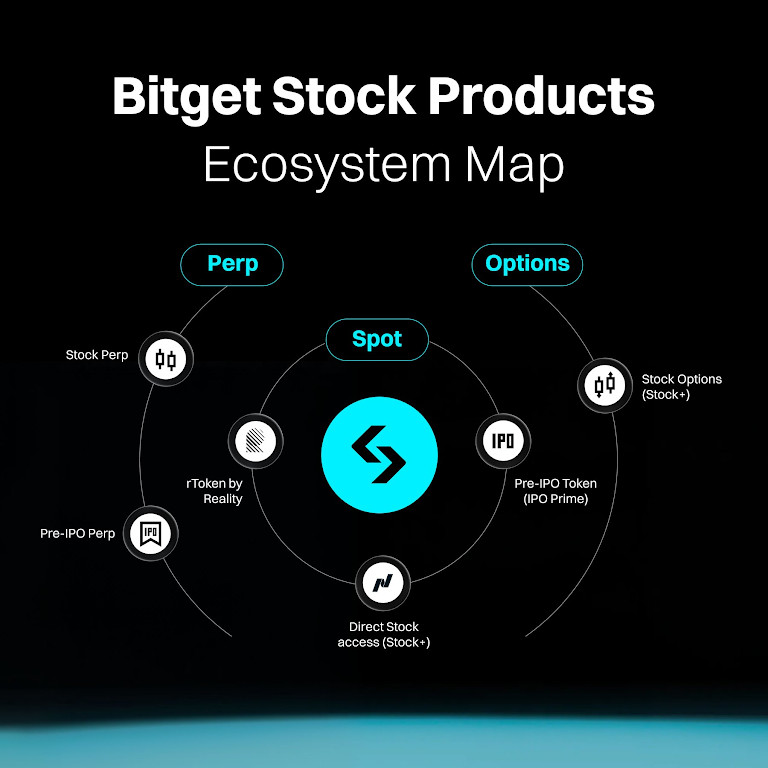
The upgrade introduces two primary products into a single account environment: rTokens, tokenized U.S. stock exposures issued through Reality, a regulated real-world asset platform backed by Bitget, and Stock+, a service enabling eligible users to purchase real U.S. stocks and ETFs using USDC. A third layer followed on July 2 with the launch of U.S. stock options, providing instruments for directional strategies, earnings cycle exposure, and portfolio downside management. Combined, the ecosystem covers more than 500 U.S. stocks and ETFs through tokenized products and more than 10,000 listings through Stock+, including Apple, Amazon, NVIDIA, Tesla, Alphabet, Microsoft, SpaceX, QQQ, and others — all accessible within the same Bitget account.
Early adoption figures indicate measurable demand: Reality’s rToken suite surpassed $50 million in assets under management within less than one month of launch, reflecting existing interest among crypto-native users in accessing equity exposure without exiting digital asset infrastructure.
Two Products, Two Portfolio Functions
The architecture of Stocks 2.0 rests on a distinction that becomes immediately apparent when navigating the platform: rTokens, Stock+, and stock options are not variations of the same product. They serve structurally different functions, and the practical value of the ecosystem depends on understanding them as such.
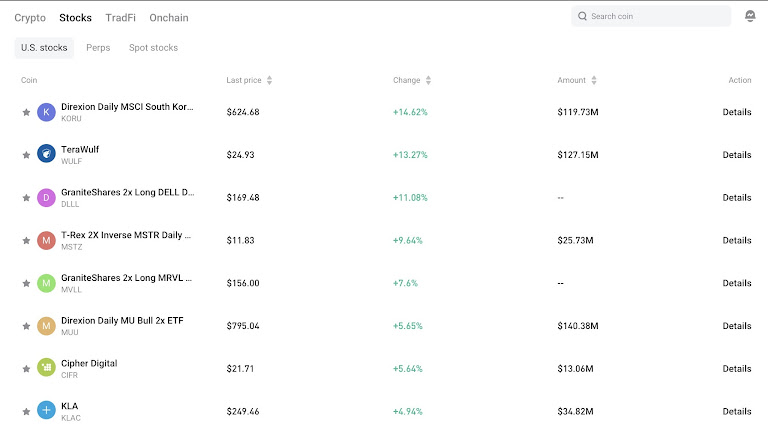
Stock+ is the most familiar entry point for anyone with prior brokerage experience. Opening a position felt recognizable — order entry, real-time market data, a portfolio view that mirrors what established Asian brokerage platforms offer. The material difference emerges at the funding step: rather than routing through bank transfers or fiat conversion, positions are funded directly from stablecoin balances. On a first trade — a fractional NVIDIA purchase funded in USDC — the process required no external transfer, no additional onboarding, and no departure from the Bitget account environment. For users whose capital already resides in USDC or USDT, that directness is not incidental; it removes a structural step that would otherwise interrupt the workflow entirely. Holdings through Stock+ carry full shareholder rights, including cash dividends, stock splits, and voting rights, executed through licensed U.S. brokers with Nasdaq and NYSE liquidity. The ownership is unconditional, and the interface makes that clarity legible.

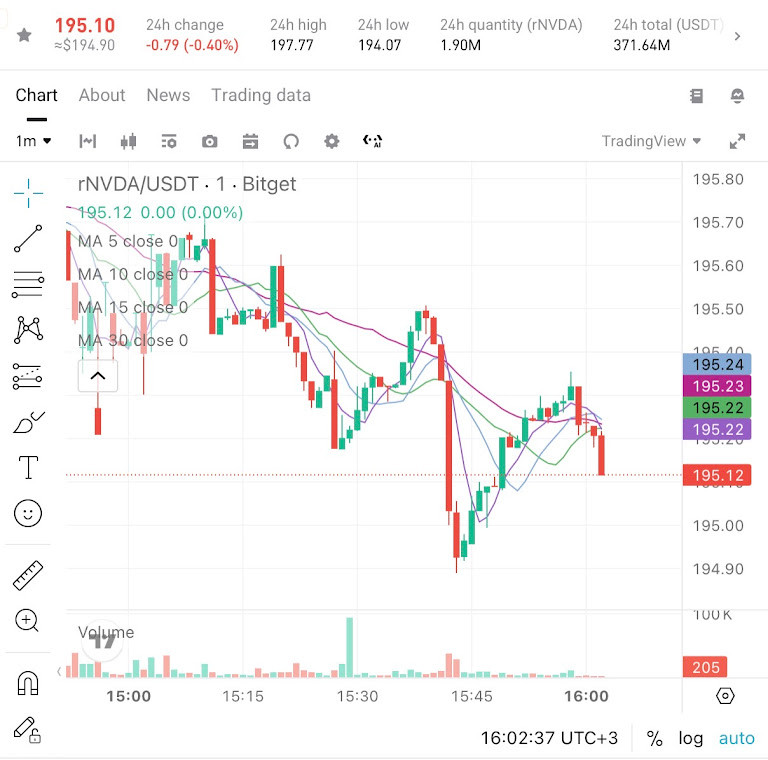
rTokens present a different experience and serve a different purpose. Issued 1:1 against real U.S. shares held in custody with FINRA-registered firms — including Alpaca Securities and Atomic Vault Securities, both covered by SIPC protections — rTokens are not synthetic instruments. The underlying ownership exists at the custody level. What changes at the user level is how that exposure behaves within the account. Testing rTokens within Bitget’s unified trading account, the collateral functionality becomes the defining characteristic: an rToken position can sit alongside an active derivatives strategy, serve as margin without requiring liquidation of the stock exposure, and support borrowing of crypto assets against its value. The trading interface resembles crypto spot trading more than a brokerage terminal, and selected major assets are available 24/7, which distinguishes the experience from Stock+’s standard 24/5 market hours. For a user running simultaneous equity and derivatives exposure, the difference in account architecture is substantive.
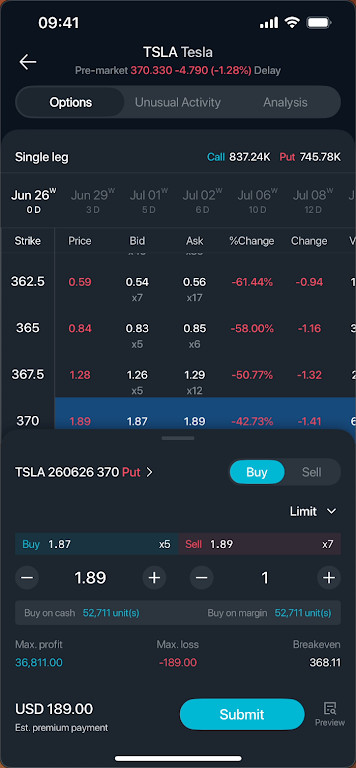
Stock options occupy a third distinct register. Launched on July 2, they are accessible through the same account but serve a more specific function: expressing directional views on individual U.S.-listed companies, managing portfolio exposure around earnings cycles, or constructing downside protection. Where Stock+ provides straightforward ownership and rTokens provide collateral-integrated equity exposure, options introduce leverage and time-bound asymmetry into the equation. Navigating the options interface, the available strategies — long calls, long puts — are presented in a format familiar to anyone with prior derivatives experience, without requiring a separate platform or a different funding mechanism.
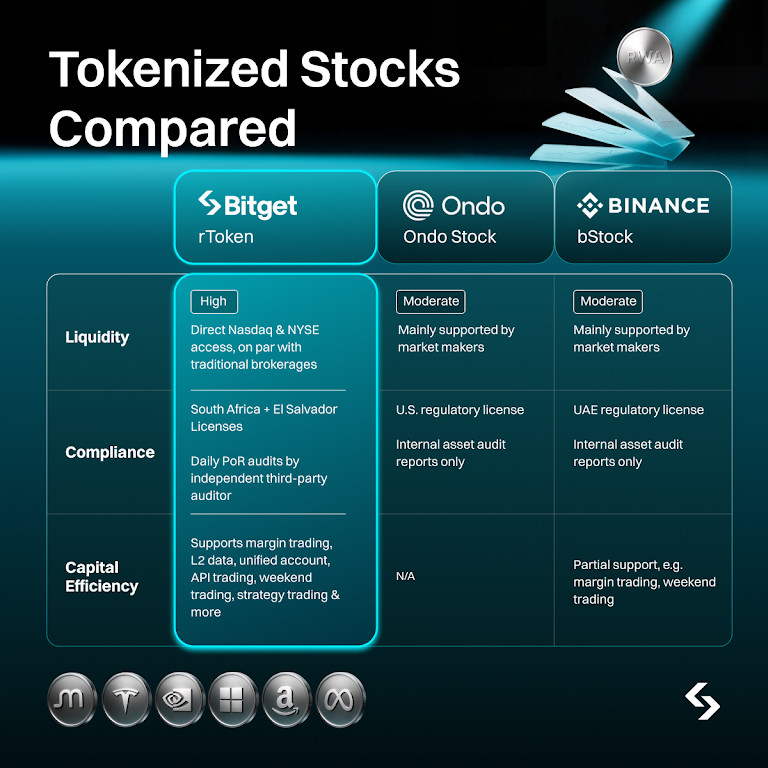
A comparative view reinforces the structural differentiation across the rToken product specifically. Against Ondo’s tokenized stock product, which relies primarily on market makers for liquidity and offers limited financial efficiency features, rTokens provide direct market access to Nasdaq and NYSE consistent with traditional brokerages, alongside margin collateral functionality, Level 2 market data, API trading, unified account management, and weekend trading. Against Binance’s bStock product, which similarly depends on market maker liquidity and provides only internal audit reports, rTokens carry dual regulatory coverage across South Africa and El Salvador with independent daily proof-of-reserves verification by a third-party auditor.
Stocks 2.0 Within Bitget’s Universal Exchange Strategy
Stocks 2.0 is positioned as a component of Bitget’s broader Universal Exchange model, which operates on the premise that users should not require separate platforms, accounts, and funding mechanisms to operate across crypto, tokenized assets, and traditional equities. Spending time across all three products within a single session makes the logic of that model tangible in a way that a product description does not fully convey.
The integration of rTokens with Bitget’s existing margin infrastructure, strategy tools, spot grid, futures grid, and copy trading features reflects this approach. Rather than functioning as a standalone equity module, rTokens interact with the account infrastructure that crypto-native users already employ. The experience of holding a tokenized equity position and managing a derivatives strategy from the same interface — without transferring funds or switching platforms — is a meaningful operational difference from the fragmented workflow it replaces.
For users approaching from a traditional brokerage background, Stock+ offers a recognizable interface while adding stablecoin-funded position entry and the option to consolidate existing equity holdings from external platforms. The Stock Transfer Fast-Track Plan supports inbound transfers from Futu, Tiger, Moomoo, Longbridge, Webull, and IBKR, with eligible users able to receive transfer fee reimbursements of up to 10,000 USDT during the promotional period. Additional incentives include a 100,000 USDT SpaceX stock reward pool for eligible new users and a 100,000 USDT Micron stock reward pool tied to Stock+ trading volume. Trading fees start from 0.1%, with a 50% promotional discount available through August 31, 2026.

Bitget CEO Gracy Chen has projected that approximately 10% of major global asset classes will be tokenized by 2030, compared to an estimated 0.5–1% at present. Stocks 2.0 is designed in alignment with that trajectory, and the launch of U.S. stock options on July 2 — a category Bitget identifies as a first among crypto exchanges — extends the platform’s equity layer toward the capability set required by active traders: directional instruments, earnings cycle strategies, and portfolio-level risk management, all within a unified account.
For users, the practical outcome is meaningful. The more common experience — managing crypto balances on one platform, equity positions on another, and navigating the conversion overhead between them — is not a minor inconvenience; it represents a genuine cost in time, capital efficiency, and portfolio visibility. Stocks 2.0 reduces that cost by consolidating three structurally distinct products — tokenized equity exposure through rTokens, direct stock ownership through Stock+, and options-based instruments — within a single account environment. Whether that constitutes a definitive solution will depend on individual workflows and jurisdictional eligibility, but the direction is clear: users who have historically been forced to fragment their financial activity across separate platforms now have a more integrated alternative. For the broader market, Stocks 2.0 illustrates how centralized exchanges are developing beyond crypto-only infrastructure — and that the convergence of digital assets and traditional equities within unified account structures is no longer a theoretical proposition but an increasingly operational one.
Disclaimer
In line with the Trust Project guidelines, please note that the information provided on this page is not intended to be and should not be interpreted as legal, tax, investment, financial, or any other form of advice. It is important to only invest what you can afford to lose and to seek independent financial advice if you have any doubts. For further information, we suggest referring to the terms and conditions as well as the help and support pages provided by the issuer or advertiser. MetaversePost is committed to accurate, unbiased reporting, but market conditions are subject to change without notice.
About The Author
Alisa, a dedicated journalist at the MPost, specializes in crypto, AI, investments, and the expansive realm of Web3. With a keen eye for emerging trends and technologies, she delivers comprehensive coverage to inform and engage readers in the ever-evolving landscape of digital finance.
More articles
Alisa, a dedicated journalist at the MPost, specializes in crypto, AI, investments, and the expansive realm of Web3. With a keen eye for emerging trends and technologies, she delivers comprehensive coverage to inform and engage readers in the ever-evolving landscape of digital finance.