Why Crypto Traders Are Watching Oil, Inflation, And The Strait Of Hormuz



Oil and inflation are watched by crypto traders, as well as the Strait of Hormuz, due to them being in the middle of the greater macro environment that is driving risk assets. The market has been dealing with an oil shock related to the war in recent weeks, the continued shipping disruption at one of the world’s key energy chokepoints, and the perception that central banks will need to remain vigilant for an extended period.
That’s a key reason crypto is important, as Bitcoin and the broader market can trade on their own story from day to day, but when macro is getting repriced like this, digital assets are getting repriced with it.
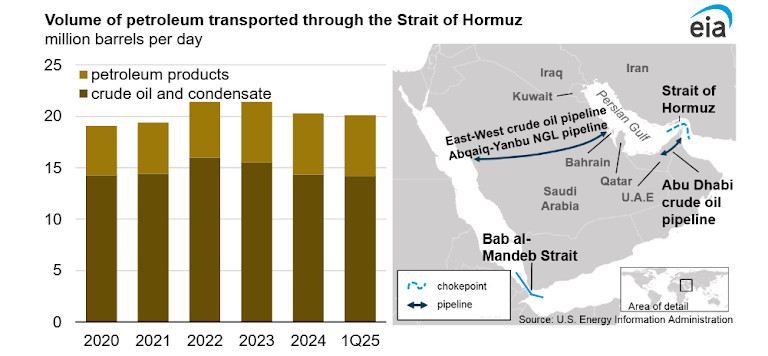
The Strait of Hormuz is no mere geopolitical curiosity. According to the U.S. Energy Information Administration, in 2024 and early 2025, more than one-quarter of global flows of seaborne oil passed through the strait, while the strait is responsible for some 10% of global consumption of oil and petroleum products.
Source: EIA
Reuters reports that the strait typically transports about 10% of global consumption of oil and petroleum products, and about 10% of global flows of seaborne oil. When that passage is disrupted, the market does not see it as a regional inconvenience. It sees it as a global pricing problem.

Oil is the first signal traders see
Oil is the first thing to trade in the cryptocurrency world, as it is a marker of the market’s view of whether geopolitical tensions are rising or falling. Iran escalated its campaign in the Strait of Hormuz, pushing both prices to their highest levels in weeks, Reuters reported on May 4, with both the Brent and WTI closing at $114.44 and $106.42, respectively.
Two days later, Reuters reported oil dropping 4% as a tentative ceasefire between Iran and the U.S. was maintained, and two ships navigated the strait. That kind of swing tells traders something important. This means that the oil market is acting like a live geopolitical dashboard, and crypto is reacting around it.
That relationship has shown up pretty clearly in crypto price action. Late April, Bitcoin, Ether, and Solana slid as Hormuz tensions lifted oil to a three-week high, and then reported again this week that Bitcoin pushed toward $82,000 as oil dropped roughly 6% on fresh hopes of an Iran peace deal.
Barron’s likewise tied Bitcoin’s latest move higher to improving macro sentiment around possible de-escalation. It is not that Bitcoin suddenly became an oil proxy. It is that traders are using oil as shorthand for whether the macro backdrop is turning more hostile or more forgiving.
Inflation is the real transmission channel into crypto
Oil matters to crypto traders mostly because of what it can do to inflation. A spike in crude does not stay neatly inside the energy complex. It can creep into transport prices, fuel prices, supply chains, and into the expectations of inflation. The Middle East war has wreaked havoc on the world economy, and the current commodity price spike, inflation pressures, and harsher financial conditions are casting a shadow of uncertainty, according to the IMF’s World Economic Outlook (WEO) report in April 2026. The energy flare-up also led to a rise in inflation forecasts for 44 of the 50 largest economies in the world in the latest Reuters poll, it has reported.
The U.S. data already had the market’s attention because of the inflation data. The CPI-U posted a seasonally adjusted 0.9% gain in March 2026, and the CPI-U 12-month gain was 3.0% seasonally adjusted and 3.3% not seasonally adjusted, according to the Bureau of Labor Statistics. This was before the impact of the current oil and shipping crisis had been felt. Traders, both macro and crypto, are viewing the inflation data as a live risk event and not background noise, and that’s why the next release is coming on Monday, May 12.
For crypto, that inflation channel matters because it changes the rate outlook. The market can absorb a lot, but it hates the combination of sticky inflation and a central bank that feels trapped. If oil-driven inflation delays rate cuts or, in the worst case, revives talk of hikes, the pressure lands quickly on speculative corners of the market. Bitcoin may be more institutionally owned than it was a few years ago, but it still trades in a world where financial conditions matter.
The Fed is the bridge between macro fear and crypto pricing
This is where the story becomes very direct for crypto traders. Reuters reported that no G10 central bank has cut rates in 2026 so far, apart from the earlier trend having clearly stalled, and that the Iran-linked oil shock has paused the global easing push. Reuters also reported that a poll of economists now expects the Federal Reserve to wait at least six months before cutting rates this year because of war-related inflation risks. In other words, the market is no longer asking only how high oil goes. It is asking what higher oil does to the path of monetary policy.
Fed officials themselves have been sounding more cautious. Reuters reported on May 6 that Fed officials are increasingly concerned that the ongoing war with Iran is raising the risk of a more persistent inflation shock through both high oil prices and supply chain strain. St. Louis Fed President Alberto Musalem said the risks have shifted toward higher inflation, while Chicago Fed President Austan Goolsbee pointed to shortages and distribution issues that feel uncomfortably familiar. That’s the sort of language crypto traders hear when they get a warning that their hopes for easy money can be dashed very rapidly.
This is important because Bitcoin is known to make the biggest gains when traders think that the liquidity situation is about to turn better. Market participants may begin to anticipate that the Fed will keep the interest rate restrictive for much longer, which could prevent yields from falling, keep the dollar strong, and lead to a slowdown in risk appetite. The dollar was trading near multi-year highs in March, when the price of oil increased, and wagering on hawkish central banks hasn’t calmed, Reuters reported. That is not the sort of backdrop altcoins usually love.
The Strait of Hormuz matters beyond oil headlines
The Strait of Hormuz matters not just because it moves oil, but because it can turn a commodity shock into a broader supply-chain problem. Reuters reported this week that the New York Fed’s Global Supply Chain Pressures Index jumped to 1.82 in April from 0.68 in March, the highest since July 2022, with the Middle East war and impeded commerce through Hormuz driving the increase. John Williams said the current disruption resembles the supply stress of 2021. When markets hear that, they do not just think “energy.” They think “renewed inflation persistence.”
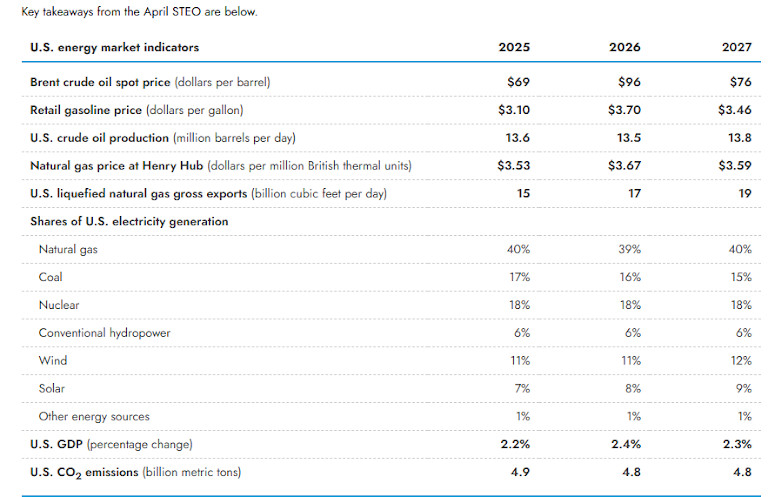
The EIA has also been explicit about the scale of the disruption. In its April release, it said oil flows through the Strait of Hormuz remained limited, causing countries that rely on the waterway for exports to shut in 7.5 million barrels per day of crude production in March, with shut-ins expected to rise to 9.1 million barrels per day in April. That is the kind of number that keeps macro desks glued to geopolitical headlines. And because crypto increasingly trades as part of the wider macro complex, crypto desks are doing the same.
Source: EIA
Reports also revealed that some tankers and LNG vessels have been resorting to evasive measures, including going dark on tracking systems, while most Hormuz shipping was recently described as being at a standstill despite U.S. pledges. Even if the absolute worst-case scenario does not materialize, the market is clearly being forced to price in disruption, delay, and higher transport costs. That has a habit of showing up in inflation data later, which is exactly why traders are watching the chokepoint so closely now rather than after the fact.
What makes this cycle interesting is that crypto is not reacting in one clean, simple way. At times, Bitcoin has traded like a classic risk asset, falling when oil jumps, yields rise, and broader sentiment sours. Towards the end of April, Bitcoin slid toward $75,000 as oil hit a four-year high, as previously reported.
Bitcoin’s breakout attempt ran into an inflation warning tied to Hormuz-driven oil stress. Those are classic macro-risk reactions.
Disclaimer
In line with the Trust Project guidelines, please note that the information provided on this page is not intended to be and should not be interpreted as legal, tax, investment, financial, or any other form of advice. It is important to only invest what you can afford to lose and to seek independent financial advice if you have any doubts. For further information, we suggest referring to the terms and conditions as well as the help and support pages provided by the issuer or advertiser. MetaversePost is committed to accurate, unbiased reporting, but market conditions are subject to change without notice.
About The Author
Alisa, a dedicated journalist at the MPost, specializes in crypto, AI, investments, and the expansive realm of Web3. With a keen eye for emerging trends and technologies, she delivers comprehensive coverage to inform and engage readers in the ever-evolving landscape of digital finance.
More articles
Alisa, a dedicated journalist at the MPost, specializes in crypto, AI, investments, and the expansive realm of Web3. With a keen eye for emerging trends and technologies, she delivers comprehensive coverage to inform and engage readers in the ever-evolving landscape of digital finance.