Top 10 Companies Issuing Enterprise Stablecoin Solutions In 2026


In Brief
Stablecoins are one of the market’s hottest areas and are gaining more traction than just crypto trading.

Stablecoins are one of the market’s hottest areas and are gaining more traction than just crypto trading.
Stablecoins are now being utilized by large businesses to enhance their treasury management systems, smooth out cross-border payments, speed up transaction settlements, and decrease the cost of conventional banking systems. Industry reports show that in addition to being the largest in market cap, Stablecoins are also responsible for significant on-chain volume, as some banks, fintech firms, and payment providers are top users.
This change has led to the rise in demand for enterprise-level stablecoin solutions.
Stablecoins for enterprises are more than just tokens; they are built with compliance, liquidity management, security, and compatibility with existing financial systems in mind. Their architecture is designed to facilitate massive commercial transactions, institutional settlements, programmable finance, and corporate treasury operations.
The following is a list of 10 companies that will dominate the enterprise stablecoin market in 2026.

Circle
Circle has been one of the leading players in the stablecoin space, especially with the launch of USD Coin (USDC).
These days, USDC is among the most preferred regulated stablecoins that enable payments, treasury, remittances, and institutional settlement throughout several blockchain platforms. Beyond the programmable payment APIs, treasury solutions, and enterprise-specific infrastructure, Circle has continued to build out its enterprise solutions.
Many global fintech companies now use USDC as the foundation for cross-border payment products and digital dollar services.

Paxos
Paxos has built its reputation around regulated blockchain infrastructure.
The company issues several regulated stablecoins while also providing white-label stablecoin issuance for financial institutions and enterprises. Companies can create their own digital currencies, each with its own brand and trust, and use Paxos to ensure regulatory compliance, custody, and infrastructure.
It has embraced a regulatory-first strategy that has established trust among financial institutions entering digital assets.
Ripple
Ripple is a firm proponent of enterprise finance and is launching into the stablecoin space with that in mind.
The company’s stablecoin approach is designed to work alongside its Ripple Payments. It focuses on cross-border payments, liquidity management, and institutional payments. Ripple’s addition of stablecoins to its global payment network is an attempt to take the pain out of international money transfer for banks and payment providers.
The company has an already established relationship with financial institutions, which is beneficial for enterprise adoption.

Agora
Agora is creating a new kind of stablecoin company.
In contrast to launching its own crypto token, the company offers infrastructure to let enterprises and fintech companies launch their own branded stablecoins in their own ecosystem. This allows businesses to have more control over their customers’ experience while providing blockchain-based settlement.
As more companies consider issuing proprietary digital dollars, platforms like Agora are becoming increasingly relevant.
OpenPayd
OpenPayd combines banking infrastructure with digital asset services.
Its platform allows businesses to access fiat accounts, payment rails, foreign exchange services, and stablecoin infrastructure from a single provider. Rather than forcing companies to choose between traditional finance and blockchain, OpenPayd bridges both environments through integrated financial services.
The company’s modular approach appeals to enterprises modernizing their payment operations.
Brale
Brale is dedicated to putting stablecoin issuance within the reach of businesses.
It has a platform that allows businesses to build stablecoins backed by fiat currency, without having to build the underlying infrastructure. Companies can create their own digital currencies without having to manage the blockchain, compliance, or reserve management themselves. Companies can launch their own digital currencies and use Brale for the blockchain, compliance, and reserve management.
This “stablecoins-as-a-service” model is attracting increasing interest from fintech companies and financial institutions.
M^0 (M Zero)
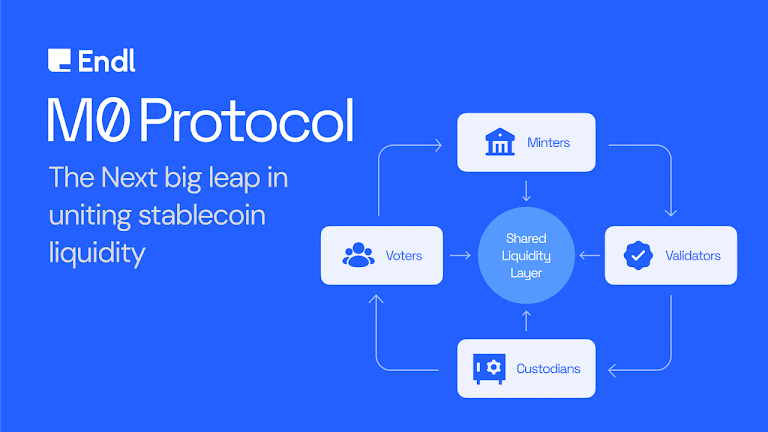
M^0 is developing infrastructure that allows regulated institutions to issue programmable digital dollars.
Instead of creating a single global stablecoin, the protocol enables multiple approved issuers to mint interoperable stablecoins backed by shared standards and governance. The model is designed to give banks greater flexibility while maintaining trust and consistency across the ecosystem.
Its architecture has drawn attention from institutions looking beyond traditional single-issuer stablecoin models.
Quantoz Payments
Based in Europe, Quantoz Payments specializes in regulated electronic money and stablecoin infrastructure.
The company has launched euro-denominated stablecoin products designed to support enterprise payments, settlement, and tokenized financial markets. With Europe’s Markets in Crypto-Assets (MiCA) framework now in force, regulated euro stablecoins are expected to play a growing role in regional digital finance.
Quantoz is positioning itself to serve that expanding market.
Monerium
Monerium has taken a distinctive approach by issuing tokenized electronic money rather than conventional stablecoins.
Its digital euro and digital pound products are designed to integrate directly with existing financial regulations while enabling blockchain-based payments and settlements. Enterprises use the platform to move regulated digital cash across public blockchain networks without sacrificing compliance.
The company’s banking background has helped differentiate it within the European market.

Banking Circle
Banking Circle has steadily expanded its digital asset capabilities alongside its established payment infrastructure.
Serving banks, fintech firms, and payment providers, the company is exploring stablecoin-enabled settlement as part of its broader mission to modernize international finance. Its existing global banking network provides a strong foundation for enterprise digital payment solutions.
As financial institutions increasingly combine fiat and blockchain infrastructure, Banking Circle is well positioned to support that transition.

Enterprise Stablecoins Are Entering a New Phase
The stablecoin sector has been transformed from being just crypto-native to a sector with a mix of traditional financial and blockchain startups. The stablecoin market is no longer a space dominated by crypto-native companies.
Digital dollars, tokenised fiat, are taking root in everyday financial transactions, among banks, payment providers, multinational corporations and fintech firms. Such features as quicker settlement, programmable payments, constant availability, and improved liquidity management are making enterprise stablecoins more appealing.
Regulators worldwide also have been setting out more rigorous rules for digital asset issuers, ensuring businesses are more confident to invest in blockchain-based payment services.
Circle, Paxos, Ripple, Agora, OpenPayd, Brale, M^0, Quantoz Payments, Monerium, and Banking Circle are all contributing to the institutionalization of that future. They have different concepts of how to approach the market, but one thing is consistent: enterprisers would like to see stablecoins be practical, compliant, and scalable.
In programmable money’s next chapter, these firms will be at the heart of the digital finance revolution.
Disclaimer
In line with the Trust Project guidelines, please note that the information provided on this page is not intended to be and should not be interpreted as legal, tax, investment, financial, or any other form of advice. It is important to only invest what you can afford to lose and to seek independent financial advice if you have any doubts. For further information, we suggest referring to the terms and conditions as well as the help and support pages provided by the issuer or advertiser. MetaversePost is committed to accurate, unbiased reporting, but market conditions are subject to change without notice.
About The Author
Alisa, a dedicated journalist at the MPost, specializes in crypto, AI, investments, and the expansive realm of Web3. With a keen eye for emerging trends and technologies, she delivers comprehensive coverage to inform and engage readers in the ever-evolving landscape of digital finance.
More articles
Alisa, a dedicated journalist at the MPost, specializes in crypto, AI, investments, and the expansive realm of Web3. With a keen eye for emerging trends and technologies, she delivers comprehensive coverage to inform and engage readers in the ever-evolving landscape of digital finance.