Top 10 AI Tools Analyzing DAO Governance Activity




Decentralized autonomous organizations (DAOs) generate enormous amounts of governance data: proposals, votes, delegates, voter participation, treasury movements, forum discussions and on-chain executions. In 2026, AI is increasingly being added to this ecosystem to summarize proposals, identify patterns, surface governance risks and make large volumes of blockchain data easier to interpret.
A key distinction is important: not every governance analytics platform is itself an AI tool. Some provide the underlying governance data that AI systems analyze, while others now offer AI-assisted summaries, natural-language querying or agent-ready intelligence. The following ten tools are therefore best understood as a combination of AI-enabled governance intelligence and analytics platforms useful for AI-driven DAO analysis.
DeGov Atlas
DeGov Atlas is one of the clearest examples of an AI-oriented DAO governance intelligence platform in 2026. It organizes proposals, votes, voters, discussions, timelines and governance signals across ecosystems. Its current index covers 883 DAOs, 66,742 proposals and more than 16.7 million indexed votes.
Its AI-oriented capabilities include evidence-backed proposal summaries, governance-context analysis and executable-action risk signals. This makes it particularly useful for identifying what a proposal does, who is participating and what on-chain actions could follow.
Dune
Dune is a broad blockchain analytics platform rather than a DAO-specific AI product, but it is extremely valuable for AI-assisted governance analysis. Its datasets include governance information alongside transactions, token activity and other blockchain data. Dune currently covers 100+ chains, with more than 1.5 million datasets listed on its platform.

Its AI capabilities allow analysts and agents to work with blockchain information through natural-language interfaces and MCP integrations. Governance teams can therefore combine voting data with treasury, token-holder and wallet activity to investigate participation and concentration.
Tally
Tally focuses specifically on on-chain DAO governance and provides proposal, voting, delegation and governance infrastructure. Its API exposes information about Governor contracts, proposals and accounts participating in on-chain DAOs.
For AI analysis, Tally is particularly useful as a structured source of governance information. An AI system can analyze proposal histories, voting participation, delegation patterns and voter behavior without having to reconstruct governance data directly from blockchain transactions.

Snapshot
Snapshot remains one of the most important sources for DAO governance activity because it enables gasless, off-chain voting. Its datasets include spaces, proposals, users and votes, allowing analysts to examine voting patterns, stakeholder participation and outcomes.
Snapshot data is also available through Dune, meaning AI analysts can combine Snapshot governance activity with broader on-chain information. This is particularly useful when studying voter turnout, proposal frequency and changes in governance participation over time.

DAOhaus
DAOhaus has developed into an observatory-style platform for examining DAO activity. As of 20 September 2026, it reported approximately 1,200 organizations and $20.3 billion in observed treasury value. Its dashboard categorizes organizations as active, quiet, dormant or inactive and displays proposal activity, quorum and treasury information.
The platform uses automated language-model summaries in some profiles. Importantly, DAOhaus warns that these summaries can be wrong and links users back to original records.

DAO Portal
DAO Portal is an analytics research platform designed around measurable DAO sustainability. A 2026 study describes its system as a production-grade dashboard combining governance and treasury data across major EVM networks.
It evaluates four dimensions: participation, accumulated funds, voting efficiency and decentralization. The research dataset included more than 50 active DAOs, 6,930 proposals and 317,317 unique voting addresses.
Its value for AI analysis lies in converting complex governance events into structured indicators that can be compared and interpreted systematically.
Boardroom
Boardroom provides governance data infrastructure covering proposals, voters, votes, delegates and voting power. Its Governance API is designed to aggregate information from multiple Web3 governance systems and supports access to proposal and voter data.
While Boardroom is primarily governance infrastructure rather than a standalone generative-AI product, its structured datasets are well suited to AI applications. Researchers can use them to analyze delegate behavior, voting concentration and governance participation across protocols.

Agora
Agora is an on-chain governance platform used by major protocols and communities. Ethereum’s ecosystem directory identifies Agora as governance infrastructure supporting protocols including Uniswap, Optimism and ENS.
Its governance interfaces expose proposals, delegates, voting power and historical voting behavior. For example, Agora delegate pages can show voting histories and delegated voting power, creating structured information that AI systems can use to identify participation patterns and delegation relationships.
DeepDAO
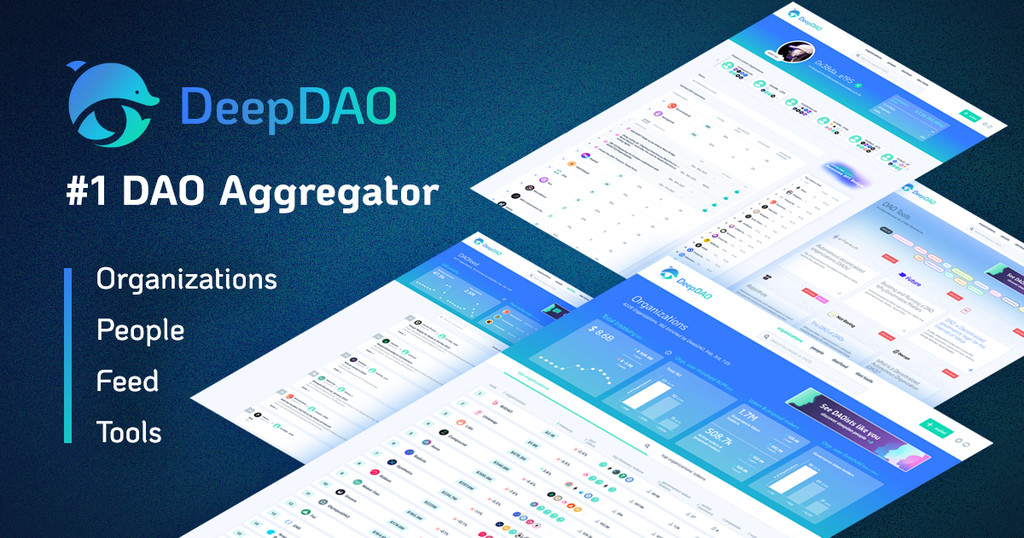
DeepDAO was historically one of the leading DAO discovery and analytics platforms, covering proposals, votes, voters, delegates and treasury information. However, its current status needs special attention: DeepDAO states that its data is no longer being updated, with the last update dated November 24, 2025. It now describes the site as a static snapshot and advises against using it for current research or decision-making.
Consequently, DeepDAO remains useful for historical AI research and datasets, but it should not be treated as a current 2026 activity monitor.
Aragon
Aragon is primarily DAO creation and governance infrastructure rather than an AI analytics platform. Nevertheless, it provides governance systems and tools that generate valuable structured data for analysis. Aragon says its technology has supported 10,000+ projects and more than $35 billion in governed assets.
Its governance framework can provide information about proposals, permissions, voting and organizational decisions that can subsequently be analyzed using AI or external analytics systems.
DAO governance analysis is moving from simple dashboards toward AI-assisted governance intelligence. DeGov Atlas represents this shift most directly, while Dune provides the broader data infrastructure needed for sophisticated AI analysis. Tally, Snapshot, Agora and Boardroom supply structured governance information, while DAOhaus and DAO Portal increasingly turn raw activity into interpretable indicators.
The most important consideration when choosing a tool is therefore not simply whether it says “AI.” Analysts should examine data freshness, governance coverage, voter-level information, proposal context, transparency of methodology and whether AI-generated conclusions can be traced back to verifiable blockchain records. That distinction is particularly important because automated summaries can contain errors, while governance decisions can involve substantial financial and organizational consequences.
Disclaimer
In line with the Trust Project guidelines, please note that the information provided on this page is not intended to be and should not be interpreted as legal, tax, investment, financial, or any other form of advice. It is important to only invest what you can afford to lose and to seek independent financial advice if you have any doubts. For further information, we suggest referring to the terms and conditions as well as the help and support pages provided by the issuer or advertiser. MetaversePost is committed to accurate, unbiased reporting, but market conditions are subject to change without notice.
About The Author
Anastasiia O. is an editor at MPost, where she focuses on reshaping content across a wide spectrum of topics. With an eye for detail and a genuine interest in storytelling, she helps ensure that the content is both accurate and engaging. Her experience spans multiple areas, providing her with the knowledge to offer insightful contributions to various topics highlighted on the platform.
More articles
Anastasiia O. is an editor at MPost, where she focuses on reshaping content across a wide spectrum of topics. With an eye for detail and a genuine interest in storytelling, she helps ensure that the content is both accurate and engaging. Her experience spans multiple areas, providing her with the knowledge to offer insightful contributions to various topics highlighted on the platform.