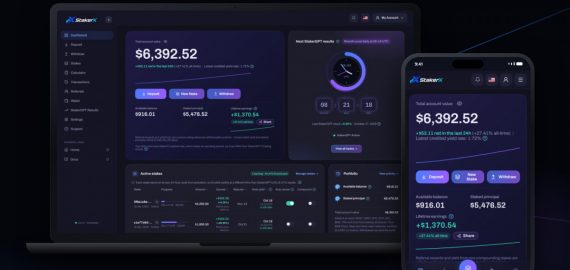


Clichmont launches compute platform linking AI infrastructure to Web3




AI compute businesses approach the market from different directions. GPU rental providers sell access to processing capacity, often with little connection to a wider ecosystem. Token-led projects build communities around future networks, then face the work of securing hardware, power, and paying customers.
Clichmont developed its physical compute infrastructure before launching a customer interface. With GPU rentals now accessible through the platform, Web3 participants can assess how the CLAI utility token contributes to the service.
The new portal isolates active compute onboarding from the rest of the company’s digital footprint. Customers navigate directly to app.clichmont.ai to rent GPU capacity and engage with the CLAI ecosystem. Clichmont separates the transactional layer from its corporate operations at clichmont.com and its general project documentation at clichmont.ai.
The infrastructure behind the platform
Behind that interface, Clichmont reports 12 GPUs at its Billingstad facility, including eight Nvidia H20 and four Nvidia RTX PRO 6000 units. Its existing Bodø Harbor deployment comprises 20 GPUs: 10 RTX 4090 and 10 RTX 5090 units. A further 40 RTX 5090 GPUs are in the pipeline.
Beyond its existing GPU deployments, Clichmont plans to build additional data centers. Alicante is in development, with construction scheduled to begin on May 1, 2027. A separate, purpose-built Bodø data center is targeted to become operational in Q4 2027.

Power availability and deployment timelines guide Clichmont’s choice of sites. The company ranks available power and time to power delivery ahead of cooling conditions and fiber connectivity, with land cost following those requirements. Each affects when capacity can enter service and what it costs to operate over time.
Alexis Cathalifaud, Clichmont CEO, said the company chose to own its infrastructure to control the entire compute stack, managing both the physical environment and the hardware inside it. “Renting capacity means depending on someone else’s availability, costs, and priorities.”
Where CLAI enters the platform
Compute on the platform is priced and paid for in stablecoin, so CLAI’s market price does not directly determine customers’ rental bills. The compute business depends on customers finding enough value in its available capacity to pay for it, which makes hardware availability, service delivery, and operating costs central to its commercial viability regardless of how much attention the token attracts.
CLAI provides an access and utility layer for the compute infrastructure. Its functions include staking for access benefits and discounts, alongside eligibility tied to a buyback mechanism.
Clichmont has also identified the operating measure it wants to prioritize. “The primary metric we want to be judged on is utilization of deployed compute capacity,” the company said. Contracted capacity and the cost of delivering compute provide further measures of whether hardware is turning into a sustainable service.
Ultimately, this launch is a useful test for a bigger question in the AI and crypto space: can a utility token attached to real infrastructure show real function on its own? What is worth watching next is the onboarding activity at app.clichmont.ai, and how the CLAI layer holds up once customers are actively using the platform.
Disclaimer
In line with the Trust Project guidelines, please note that the information provided on this page is not intended to be and should not be interpreted as legal, tax, investment, financial, or any other form of advice. It is important to only invest what you can afford to lose and to seek independent financial advice if you have any doubts. For further information, we suggest referring to the terms and conditions as well as the help and support pages provided by the issuer or advertiser. MetaversePost is committed to accurate, unbiased reporting, but market conditions are subject to change without notice.
About The Author
Gregory, a digital nomad hailing from Poland, is not only a financial analyst but also a valuable contributor to various online magazines. With a wealth of experience in the financial industry, his insights and expertise have earned him recognition in numerous publications. Utilising his spare time effectively, Gregory is currently dedicated to writing a book about cryptocurrency and blockchain.
More articles
Gregory, a digital nomad hailing from Poland, is not only a financial analyst but also a valuable contributor to various online magazines. With a wealth of experience in the financial industry, his insights and expertise have earned him recognition in numerous publications. Utilising his spare time effectively, Gregory is currently dedicated to writing a book about cryptocurrency and blockchain.